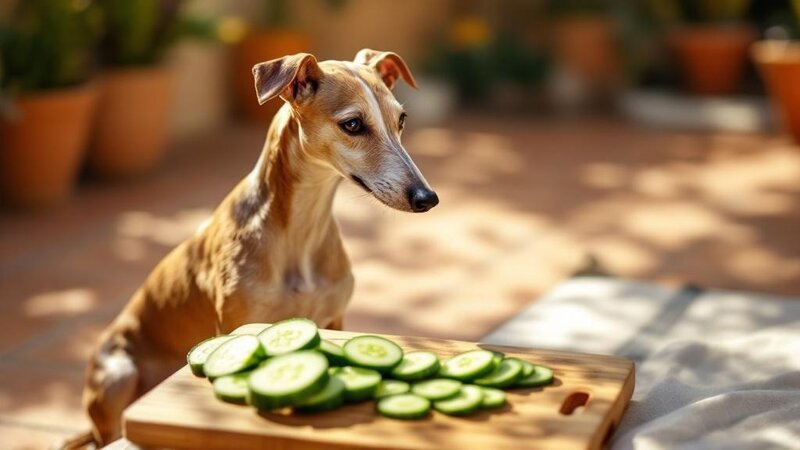

My whippet Oscar turned his nose up at every “healthy” treat I tried. Carrots? Spat out. Apple slices? Ignored. Then one afternoon I was slicing cucumber for a salad and dropped a piece. He ate it before it hit the floor. That was two years ago, and cucumbers are now his go-to snack between meals.
Short answer: yes, cucumbers are completely safe for dogs. They are actually one of the best snack options out there — almost no calories, packed with water, and most dogs like the crunch.
But there are a few things worth knowing before you start tossing your dog cucumber slices every day.
What makes cucumber such a good dog treat
Cucumber is roughly 96% water. That makes it one of the most hydrating foods you can offer your dog, which helps on hot days or after a long walk.
Here is what is actually in 100g of raw cucumber:
- 15 calories (compare that to 89 for banana or 52 for apple)
- Vitamin K — supports blood clotting and bone health
- Vitamin C — antioxidant support
- Potassium — helps muscle and nerve function
- Magnesium — involved in hundreds of biochemical reactions
The calorie count is what matters most here. If your dog needs to drop a few pounds — and according to the Association for Pet Obesity Prevention, over 50% of dogs in the US are overweight — cucumber lets them snack without the calorie hit.
How much cucumber can your dog have?
This depends entirely on size. A Chihuahua and a Great Dane should not get the same amount of anything.
The general guideline from most veterinarians, including the ASPCA: treats and extras should make up no more than 10% of your dog’s daily caloric intake.
Since cucumber is only 15 calories per 100g, your dog can have quite a bit compared to denser treats. Use our calculator below for a portion tailored to your dog’s weight.
Skin, seeds, and the parts people worry about
Cucumber skin: Safe. The skin contains most of the fiber and some of the nutrients. Some dogs with sensitive stomachs might have trouble digesting it, though. If your dog gets gassy or has loose stool after eating cucumber with skin, try peeling it next time.
Seeds: Also safe. Cucumber seeds are soft and non-toxic. Unlike apple seeds (which contain trace amounts of amygdalin), cucumber seeds pose no chemical risk. Some vets suggest scooping them out for puppies or dogs prone to digestive issues, but for most dogs it is not necessary.
The stem end: A bit bitter due to higher cucurbitacin concentration. Not dangerous, but your dog will probably reject it anyway. Dogs are surprisingly good at avoiding bitter food.
How to prepare cucumber for your dog
Do not overthink this. Wash it, slice it, done.
A few practical tips depending on your dog’s size:
- Small dogs (under 10kg): Thin slices, about half a centimeter thick. A whole round could be a choking hazard for toy breeds.
- Medium dogs (10-25kg): Regular slices or small chunks. Some owners cut lengthwise strips, which work well for dogs who like to crunch.
- Large dogs (25kg+): Chunks or thick slices. Most large dogs will crunch through cucumber without any issue.
You can serve cucumber raw, which most dogs prefer. Some people freeze slices in summer — frozen cucumber discs make a decent hot-weather treat that keeps dogs occupied for a minute or two. Cooking cucumber is fine but pointless; it goes mushy and loses the crunch that makes it fun for them.
How cucumber stacks up against other low-calorie treats
Not all “healthy” dog treats are equal. Here is how cucumber compares:
| Cucumber | Carrot | Watermelon | Blueberries | |
|---|---|---|---|---|
| Calories/100g | 15 | 41 | 30 | 57 |
| Water content | 96% | 88% | 92% | 84% |
| Safety Score | 10/10 | 9/10 | 9/10 | 10/10 |
| Best for | Weight loss | Dental health | Hydration | Antioxidants |
Cucumber wins on calories and hydration. If your dog is on a diet, cucumber is the clear first choice. For nutritional density, blueberries edge ahead. For dental benefits (that satisfying crunch that scrapes teeth), carrots work better because they are firmer.
Related: Can dogs eat watermelon? · Can dogs eat blueberries? · Can dogs eat bananas?
When NOT to give your dog cucumber
A few situations where you should skip it:
Pickles — absolutely not. Pickled cucumbers contain salt, vinegar, garlic, onion, and spices. Garlic and onion are toxic to dogs. Even “plain” pickles have far too much sodium. One pickle can contain 300-400mg of sodium; a medium dog’s entire daily sodium need is around 100mg.
Dogs with kidney problems. Cucumber is high in water and potassium. For dogs with compromised kidney function, extra potassium can be problematic. Check with your vet first.
Whole cucumbers. Do not hand your dog an entire cucumber like a bone. It is a choking hazard, especially for dogs who gulp food instead of chewing. Always cut it up.
Frequently asked questions
Can puppies eat cucumber?
Yes, from about 8 weeks old once they are on solid food. Cut into very small pieces. Remove skin and seeds for puppies under 6 months — their digestive systems are still developing.
Can dogs eat cucumber every day?
Yes. Given the extremely low calorie content, daily cucumber is fine for most dogs. It is one of the few treats where “every day” is not a concern, as long as you stay within the 10% treat guideline.
Will cucumber help my overweight dog lose weight?
It can help as a treat replacement. Swapping out commercial treats (which often run 30-80 calories each) for cucumber slices reduces daily calorie intake without your dog feeling deprived. Pair it with appropriate food portions and exercise. Cucumber alone will not solve a weight problem.
My dog ate a whole cucumber — should I worry?
Probably not. The main risk is an upset stomach or loose stool from the sudden fiber and water intake. Watch for vomiting or significant diarrhea over the next 12-24 hours. If your dog seems uncomfortable, contact your vet. For small dogs who ate a large cucumber, watch for signs of intestinal blockage (lethargy, repeated vomiting, not eating).
Can dogs eat cucumber with hummus or dip?
No. Most dips contain garlic, onion, salt, or other ingredients that are harmful to dogs. Plain cucumber only.