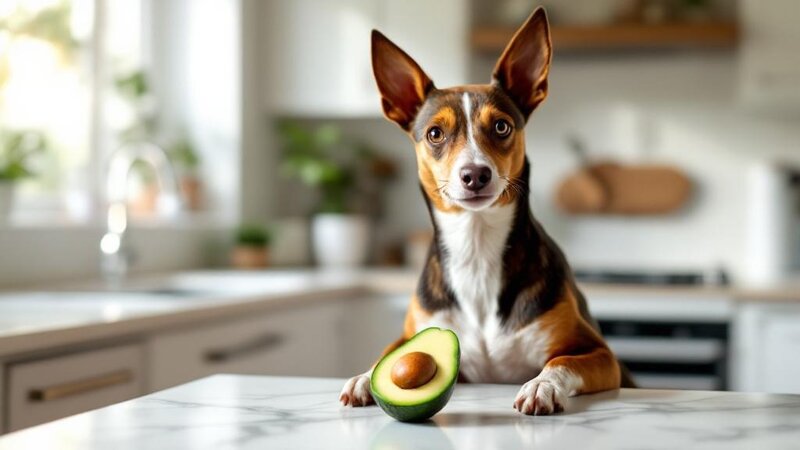

I’ll be honest — I had to look this one up twice before feeding my basenji Kira even a tiny piece of avocado. The internet is split right down the middle. Half the sites say avocado is toxic to dogs. The other half say it’s fine. Neither side is entirely wrong, which makes this one of the more confusing foods to navigate as a dog owner.
Here’s the short version: the flesh of a ripe avocado is not toxic to dogs in small amounts. But the skin, pit, and leaves contain persin, a fungicidal toxin that can cause vomiting and diarrhea. And the pit is a serious choking and obstruction hazard regardless of toxin content.
So — it’s not a simple yes or no.
What actually makes avocado risky
The concern with avocado comes from a compound called persin. It’s produced by the avocado tree and found in the leaves, bark, skin, and pit. The flesh contains persin too, but at much lower concentrations.
Here’s the thing that most articles skip over: dogs are relatively tolerant of persin compared to other animals. Birds and horses can die from small amounts. Dogs would need to eat a significant quantity of avocado skin or leaves before showing serious symptoms. The ASPCA confirms that persin can cause vomiting and diarrhea in dogs, but fatal persin poisoning in dogs is extremely rare.
The bigger risks with avocado are actually:
- The pit. It’s large, hard, and slippery. Dogs who swallow it can end up with a bowel obstruction that requires surgery. This is the actual emergency scenario with avocado, not the persin.
- The fat content. Avocado flesh is about 15% fat. That’s a lot for a dog. Too much fat in one sitting can trigger pancreatitis, especially in smaller breeds or dogs with a history of the condition.
- Guacamole and prepared avocado. Garlic, onion, salt, lime — all common additions, all bad for dogs.
How much avocado is safe?
Small amounts of plain, ripe avocado flesh — we’re talking a few small cubes — are unlikely to cause problems for most dogs. But “unlikely to cause problems” is not the same as “good idea.”
Avocado is calorie-dense. A single avocado has around 240 calories and 22g of fat. For context, a 10kg dog needs roughly 400 calories per day total. Half an avocado would be more than a quarter of their daily intake.
If you’re going to share some with your dog, keep it small. A few thin slices at most, and not as a regular thing.
The parts you should never give your dog
Pit/stone: Choking hazard and potential bowel obstruction. Even if your dog chews it into pieces, the fragments are hard and indigestible. If your dog swallowed an avocado pit, call your vet immediately — don’t wait for symptoms.
Skin/peel: Higher persin concentration than the flesh. Tough to digest even without the toxin concern. Throw it away where your dog can’t reach the bin.
Leaves and bark: Only relevant if you have an avocado tree in your garden. Some dogs chew on anything green. Leaves have the highest persin levels. Fence the tree off if your dog is a chewer.
Avocado compared to other fatty treats
Avocado isn’t the only high-fat human food people give their dogs. Here’s how it compares:
| Avocado | Cheese | Peanut Butter | Coconut | |
|---|---|---|---|---|
| Calories/100g | 160 | 402 | 588 | 354 |
| Fat/100g | 15g | 33g | 50g | 33g |
| Safety Score | 3/10 | 5/10 | 7/10 | 6/10 |
| Risk | Persin, pancreatitis | Lactose, sodium | Xylitol (some brands) | GI upset |
Avocado scores low not because a bite will poison your dog, but because the risk-to-benefit ratio is poor. There are plenty of safer, cheaper treats. Cucumber has almost zero risk. A slice of apple has zero risk. Avocado just doesn’t make sense as a regular treat when better options exist.
Related: Can dogs eat cucumbers? · Can dogs eat bananas? · Can dogs eat apples?
When to call the vet
Get in touch with your veterinarian if your dog:
- Swallowed an avocado pit (even partially chewed)
- Ate a large amount of avocado (more than half, especially for small dogs)
- Shows repeated vomiting or diarrhea after eating avocado
- Has a history of pancreatitis and ate any amount of avocado
- Got into guacamole or avocado dip containing garlic or onion
Most dogs who eat a few bites of avocado flesh will be completely fine. The scenarios that need veterinary attention usually involve the pit or large quantities.
Frequently asked questions
Can dogs eat avocado oil?
Avocado oil is processed and contains minimal persin. Small amounts drizzled on food are generally safe. Some commercial dog foods actually include avocado oil as an ingredient. That said, it’s pure fat — use sparingly.
Why does AvoDerm dog food contain avocado if it’s toxic?
AvoDerm uses avocado oil and meal from the flesh, not the skin, pit, or leaves. The flesh contains very low persin levels. It’s a valid question though, and the answer is that “avocado is toxic to dogs” is an oversimplification. Parts of it are. The flesh, in moderation, is not.
My dog ate avocado toast — should I worry?
Plain avocado on toast is probably fine (same as eating the flesh). Check what was on the toast though — garlic salt, onion, chili flakes? Those are the actual problems. Monitor for vomiting over the next few hours.
Is avocado good for a dog’s coat?
The healthy fats in avocado can theoretically support skin and coat health, similar to fish oil. But you’d need to feed it regularly to see any difference, and there are much better omega-3 sources (salmon oil, sardines) without the persin concern.
Can puppies eat avocado?
Best to avoid it entirely for puppies. Their digestive systems are more sensitive, they’re at higher risk of pancreatitis from fatty foods, and even a small piece of pit could cause an obstruction in a small puppy. There’s no reason to take the risk when so many safe alternatives exist.