

Raw spinach contains roughly 970mg of oxalic acid per 100g. That’s one of the highest oxalate loads of any vegetable you’d find in a typical kitchen. Knowing that number changes how you think about the question.
Yes, dogs can eat spinach. But the blanket “yes, it’s safe” answer you’ll find on most pet sites skips over something worth understanding: oxalic acid binds to calcium and magnesium in the blood, reducing their availability. In dogs with healthy kidneys, small amounts aren’t a problem. In dogs with a history of bladder or kidney stones (particularly calcium oxalate stones), even moderate amounts can add up over time.
This isn’t a reason to panic. It’s a reason to be slightly more deliberate about how much and how often.
What’s actually in spinach
Spinach earned its “superfood” status honestly. A 100g serving contains vitamins A (9,377 IU), K (483mcg), C (28mg), iron (2.7mg), folate (194mcg), and beta-carotene (5,626mcg), an antioxidant that helps neutralise free radicals.
For a dog already eating complete commercial food, none of this is strictly necessary. Their diet covers it. But as an occasional treat, spinach does add something real rather than empty calories.
One thing PetMD notes that most other sources miss: spinach also contains isothiocyanates, the same compound found in broccoli and kale. In large amounts, these can cause stomach upset. In the quantities you’d actually give a dog as a treat, it’s not really a concern, but worth knowing if your dog tends to have a sensitive stomach.
The oxalate question, properly explained
When spinach is eaten, oxalic acid forms oxalate compounds that bind with calcium in the digestive tract. Some get absorbed into the bloodstream. Healthy kidneys filter them out and excrete them in urine.
The problem, for dogs and humans alike, is when oxalate levels in urine get high enough that they start crystallising. Calcium oxalate crystals are the most common type of kidney and bladder stones in dogs. Breeds already prone to stone formation are at higher risk.
According to AKC veterinary experts, dogs with healthy kidneys can handle small amounts without issue. The concern is long-term, cumulative consumption, not a single spinach leaf.
Practical rule: an occasional small amount is fine for most dogs. Regular large servings are not a good idea for any dog, and spinach should be avoided entirely for dogs with a history of urinary crystals or kidney disease.
Breeds with higher risk
Some dogs are genetically predisposed to calcium oxalate urolithiasis (stone formation). If your dog is one of these, it’s worth skipping spinach entirely or offering it only very rarely:
- Miniature Schnauzer
- Bichon Frise
- Lhasa Apso
- Yorkshire Terrier
- Miniature Poodle
If you’re not sure whether your dog has had urinary crystals before, ask your vet before making spinach a regular treat.
Raw vs steamed vs boiled
It does actually matter.
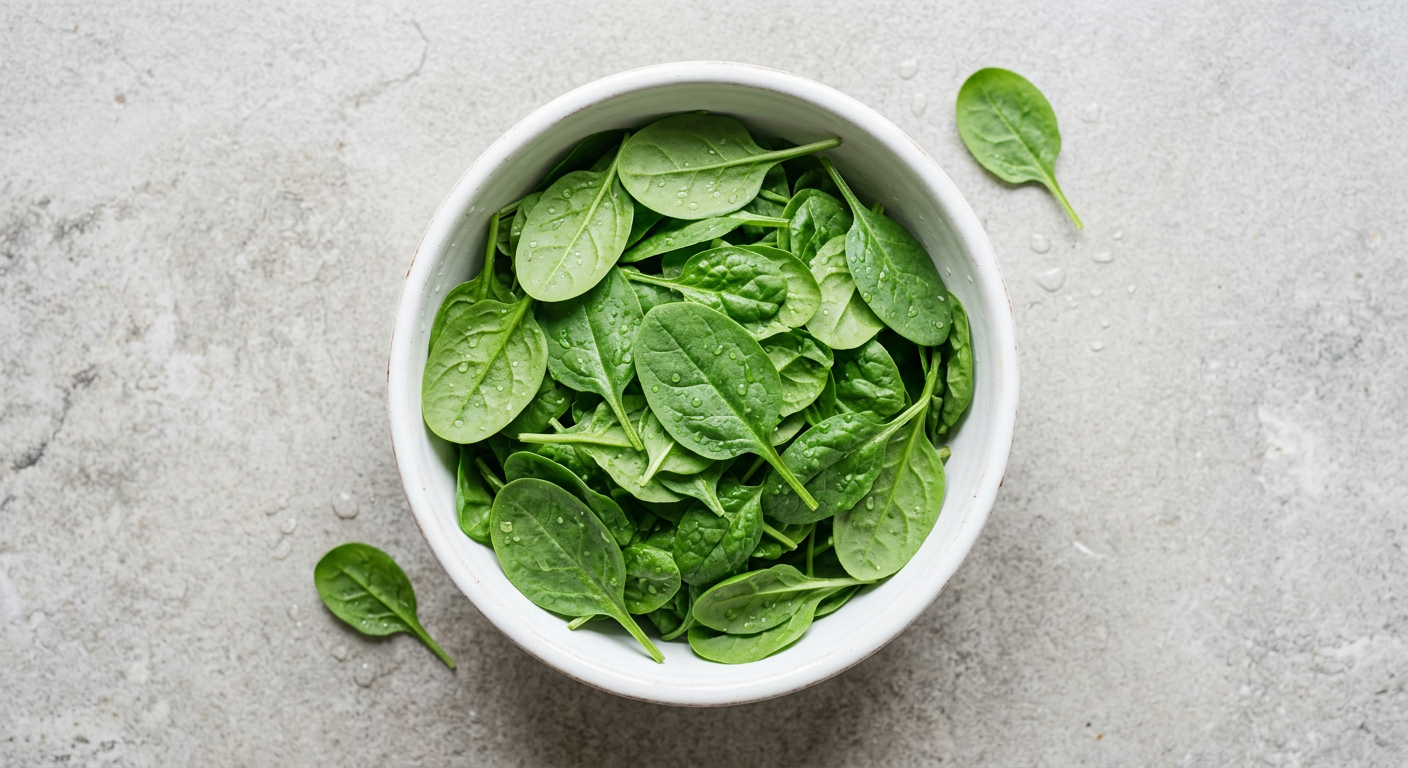
Raw spinach is the most nutrient-dense but also the hardest to digest. Dogs don’t produce the enzymes needed to break down plant cell walls efficiently, so a lot of the nutrition passes straight through. Raw also preserves the full oxalate load.
Steamed spinach is the best option. It softens the cell walls, making nutrients more bioavailable, and light cooking reduces soluble oxalates. A 2005 study in the Journal of Agricultural and Food Chemistry found that boiling spinach reduced total oxalate content by 30-87% depending on the method, though it also stripped water-soluble vitamins. Steaming is the practical middle ground.
Boiled spinach loses the most nutrients (vitamins B and C leach into the water) but reduces oxalates most significantly.
For dogs: steam it, chop it small, serve it plain. No salt, no oil, no garlic, no onion.
How much spinach can dogs eat?
There’s no universally agreed safe dose, but a sensible rough guide based on body weight:
| Dog size | Weight | Serving |
|---|---|---|
| Small | Under 10kg | 1-2 small leaves, chopped |
| Medium | 10-25kg | 3-4 leaves, chopped |
| Large | Over 25kg | A small handful, chopped |
Use the calculator below to get an amount based on your dog’s weight:
These are occasional servings, not daily. Think of it as a treat-level food rather than a dietary supplement. Never serve canned spinach: it’s typically high in sodium, which can cause vomiting, diarrhoea, and increased blood pressure in dogs with cardiac issues.
What about baby spinach?
Baby spinach is just younger spinach harvested earlier. It’s slightly lower in oxalates than mature spinach and has a softer texture, which makes it easier to chew and digest. Either is fine in small amounts. Baby spinach is marginally preferable if you’re choosing between them.
Signs your dog has eaten too much
Most dogs who eat a couple of leaves will be completely fine. But if a dog gets into a larger amount, watch for vomiting or diarrhoea (within a few hours), lethargy, muscle weakness (sign of electrolyte imbalance, very rare), or increased thirst and urination (sign of kidney stress, rare, and only with chronic overconsumption).
A single large serving is unlikely to cause anything beyond a mildly upset stomach. Call your vet if symptoms are severe or persist.
The short version
Dogs can eat spinach. In small, occasional, steamed servings, chopped and served plain, it’s a nutritionally reasonable treat. The oxalate concern is real but mostly relevant for dogs with pre-existing kidney or urinary issues, or breeds prone to stone formation.
If your Irish Setter nicks a leaf while you’re making a salad, that’s genuinely not a problem. If you’re thinking about adding it to their bowl three times a week, that’s worth reconsidering. For more on what dogs can safely eat, check our Dogs hub, or read about cucumbers, blueberries, and avocado.
Frequently asked questions
Can puppies eat spinach?
Yes, in very small amounts. Puppies are smaller and their kidneys are still developing, so keep portions minimal (a single leaf, chopped) and don’t make it a regular thing. If in doubt, skip it until they’re fully grown.
Is cooked or raw spinach better for dogs?
Steamed is best. Raw is harder to digest and carries the full oxalate load. Boiled removes the most oxalates but also loses the most nutrients. A light steam and a rough chop is the practical middle ground.
Can dogs eat spinach every day?
Not recommended. Daily consumption over time increases cumulative oxalate exposure, which can stress the kidneys even in healthy dogs. Occasional is fine; daily is not.
What if my dog ate a lot of spinach?
A single large serving is unlikely to cause serious harm in a healthy dog. Watch for vomiting, diarrhoea, or lethargy in the hours following. If symptoms are severe, or if your dog has known kidney issues, contact your vet.
Are there vegetables safer than spinach for dogs?
Yes. Carrots, green beans, and courgette (zucchini) have very low oxalate content and are generally easier on the digestive system. You might also check whether white rice or sweet potato suit your dog as a supplement.