


If mercury is the reason you’ve been hesitant about feeding fish to your dog, sardines are actually the argument for feeding fish, not against it. They live for one to two years, sit near the bottom of the food chain, and accumulate a fraction of the mercury that builds up in larger fish like tuna or salmon. A dog eating sardines regularly is getting one of the cleanest omega-3 sources available.
So yes, dogs can eat sardines. The question isn’t whether they’re safe — it’s which kind to buy and how often to serve them.
Canned vs fresh — which is better?
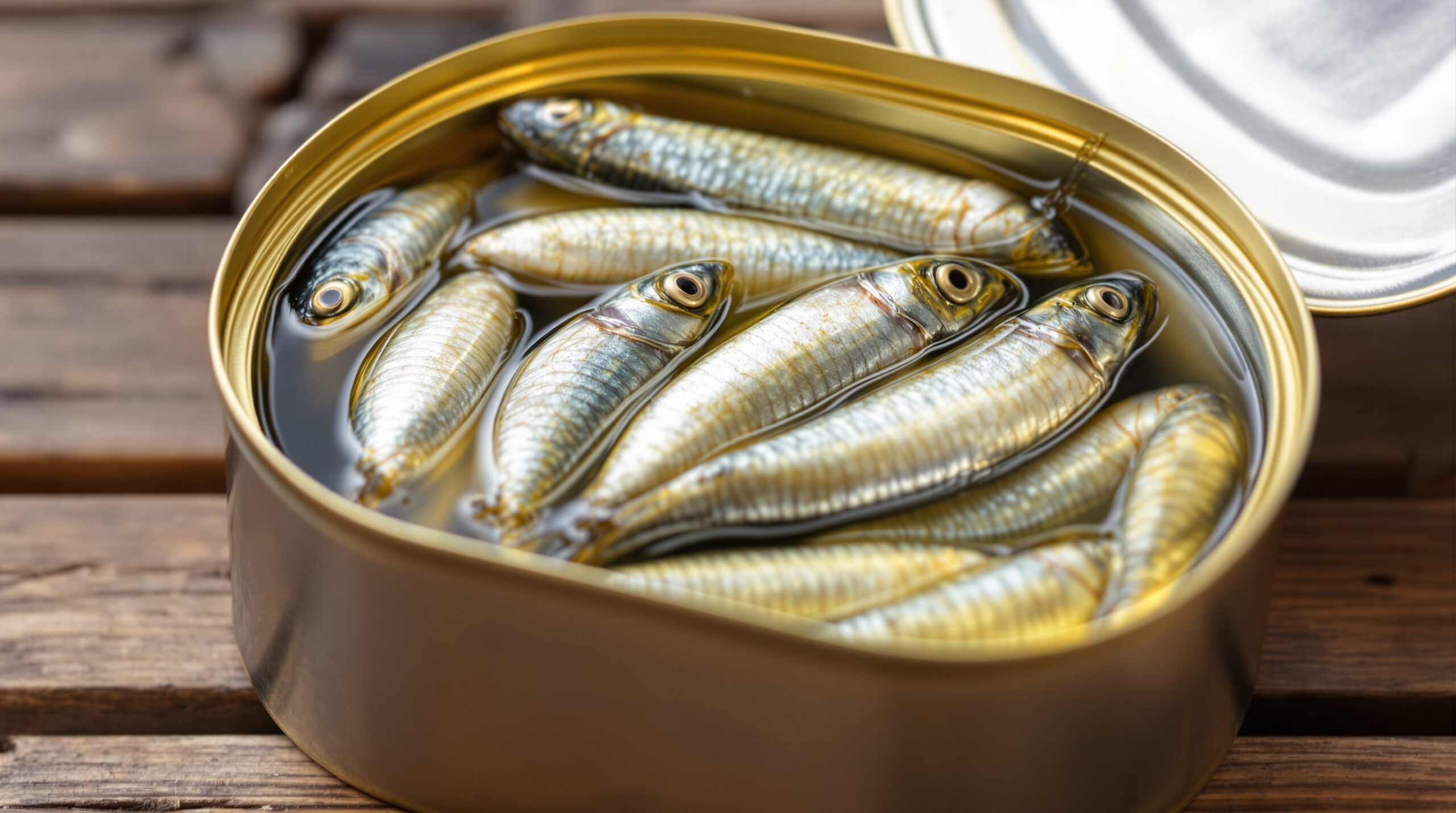
Most people feed their dogs canned sardines, and that’s fine, with one important condition: water-packed only. Sardines in brine contain 400-700mg of sodium per 100g. Sardines in oil are high in fat and can trigger pancreatitis in susceptible dogs. Sardines in tomato sauce bring both excess sodium and acidity.
Check the label. The ingredient list should say: sardines, water. That’s it.
Fresh sardines are nutritionally superior — higher in omega-3s, no sodium, no additives. If you can get them at a fishmonger, lightly steam or bake them plain. Don’t fry. Remove the head and any large bones before serving, though the small, soft bones in canned sardines are actually fine and a decent source of calcium.
What’s in a sardine — the numbers
A 100g serving of water-packed canned sardines (drained) contains roughly:
- Protein: 25g — high quality, complete amino acid profile
- Fat: 11g, mostly omega-3 fatty acids (EPA and DHA)
- Omega-3 (EPA + DHA): approximately 1,400-2,200mg
- Vitamin B12: 8.9mcg (370% of human RDA — dogs need it too)
- Vitamin D: 193 IU
- Calcium: 382mg (from bones)
- Selenium: 52mcg — antioxidant, thyroid function support
- CoQ10: present in small amounts — supports heart health
The omega-3 content is the main reason sardines get recommended for dogs. EPA and DHA support joint health, reduce inflammation, improve coat condition, and have documented benefits for cognitive function in ageing dogs. Research published in the Journal of Veterinary Internal Medicine has shown omega-3 supplementation reduces markers of inflammation in dogs with osteoarthritis.
The mercury question — sardines vs tuna
Mercury accumulates through the food chain. A tuna lives for 15-40 years and eats smaller fish throughout its life, concentrating mercury in its tissues. A sardine lives for 1-2 years and eats mostly plankton. The difference in mercury load is significant.
According to FDA testing data, sardines average 0.013 parts per million of mercury — among the lowest of any commercial fish. Canned light tuna averages 0.128 ppm. Albacore tuna averages 0.350 ppm. Sardines are roughly 10-27x lower in mercury than tuna.
For dogs fed fish regularly, this distinction matters. Sardines are one of the few fish you can give multiple times a week without mercury being a realistic concern.
How much can dogs eat?
Sardines should be treated as a supplement to a balanced diet, not a meal replacement. The 10% treat rule applies — all extras combined shouldn’t exceed 10% of your dog’s daily calories.
| Dog size | Weight | Serving | Frequency |
|---|---|---|---|
| Small | Under 10kg | ½ sardine | 2-3x per week |
| Medium | 10-25kg | 1 sardine | 2-3x per week |
| Large | Over 25kg | 2 sardines | 2-3x per week |
Use the calculator below for an exact portion based on your dog’s weight:
What about the bones?
Canned sardines have soft, pressure-cooked bones that are completely safe for dogs to eat whole. They’re actually a good calcium source — no need to remove them.
Fresh sardines are different. The small pin bones throughout the flesh are fine, but the spine and larger bones in a whole fresh sardine should be removed before serving, especially for small dogs. The head can be removed too, though it’s not toxic — just harder to chew and digest.
When to avoid sardines
Sardines aren’t right for every dog. Skip them if your dog has:
- Pancreatitis or a history of it — the fat content, even healthy fat, can trigger a flare-up
- Heart disease requiring a low-sodium diet — even water-packed sardines contain some sodium; check with your vet
- A fish allergy — uncommon in dogs but it exists; signs include itching, hives, or digestive upset after eating fish
- Kidney disease — high phosphorus content may need monitoring
If your dog is on any cardiac medication, it’s worth checking with your vet before adding sardines regularly. CoQ10 in sardines can interact with certain anticoagulants.
How to serve them
Most dogs will eat sardines straight from the can with no persuasion needed. A few serving ideas that work well:
- Mashed over kibble as a topper (the smell alone makes it interesting)
- Mixed into plain cooked rice or sweet potato for a sick dog that needs appetite encouragement
- Frozen in a Kong or lick mat for enrichment
- Crumbled and used as high-value training treats — the smell carries well outdoors
Store opened canned sardines in the fridge in a covered container. Use within 2 days. Don’t leave them at room temperature — fish spoils quickly and bacteria grow fast. For more ideas on safe fish and protein treats, check our Dogs hub or see whether cats can eat tuna if you have both at home.
Frequently asked questions
Can dogs eat sardines every day?
2-3 times per week is a better target than daily. Daily sardines for a small dog can add up calorically, and some vets prefer rotating protein sources rather than relying on one fish consistently. That said, daily small amounts in a large dog are unlikely to cause any issues.
Can puppies eat sardines?
Yes, from about 8 weeks old. Keep portions very small — half a sardine for a medium-sized puppy is plenty. The omega-3s are actually particularly useful for developing brains and eyes. Make sure they’re water-packed, boneless, and without seasoning.
Sardines in spring water vs olive oil — which is better?
Spring water every time. Olive oil sardines are technically less harmful than sunflower oil, but the added fat is unnecessary. Dogs already get plenty of fat from sardines themselves. Spring water preserves the fish without adding anything extra.
My dog ate sardines in tomato sauce. Should I worry?
One accidental serving is unlikely to cause serious harm. Watch for vomiting, diarrhoea, or excessive thirst over the next few hours. The concern with tomato sauce is sodium content (700-900mg per 100g) and acidity, both of which can cause digestive upset. Not an emergency, but avoid it going forward.
Are sardines better than fish oil supplements?
Whole sardines provide omega-3s alongside protein, vitamins, and minerals that fish oil capsules don’t. Fish oil is more concentrated and easier to dose precisely. Both are valid — sardines are a more complete food source, fish oil is more convenient for consistent supplementation. Many owners use both. See also our article on boiled eggs for another nutrient-dense whole food option, or check whether sweet potato suits your dog as a carb alongside fish meals.