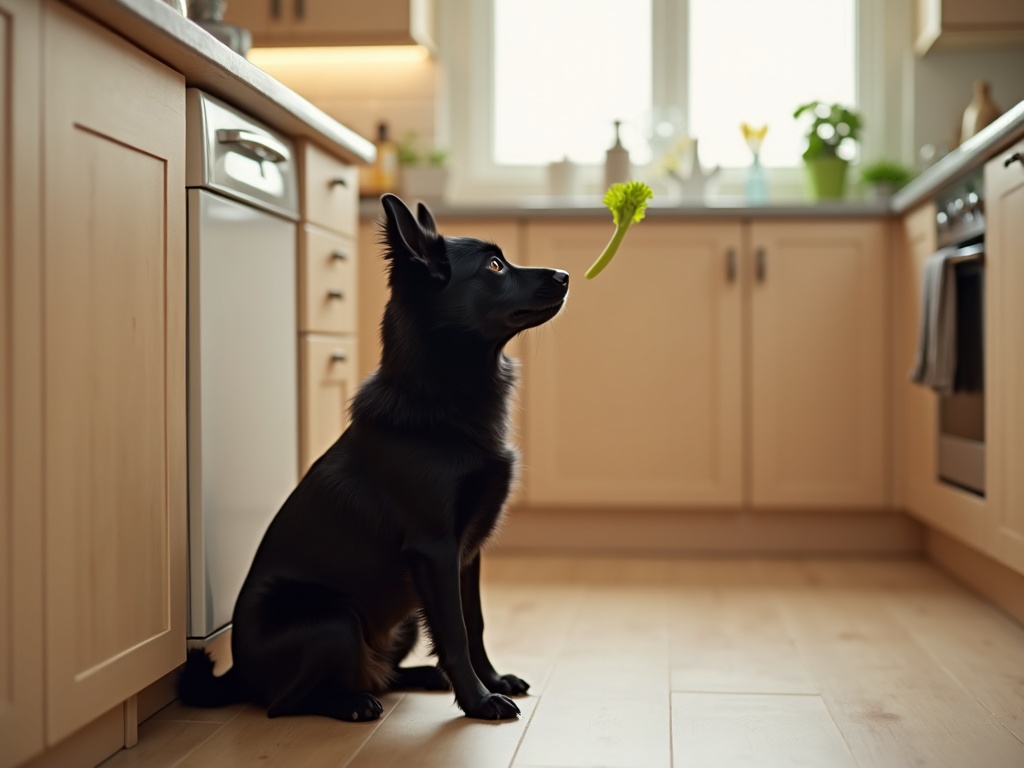

Most dog treat lists skip celery entirely. It gets overshadowed by blueberries and carrots, which have better PR in the pet nutrition world. That’s a shame, because celery is actually one of the more useful vegetables you can give a dog — particularly in hot weather, and particularly for dogs that need low-calorie snacks.
Can dogs eat celery? Yes, without any real caveats beyond portion size and one preparation step most guides miss. The details follow.
The fibre strand problem nobody mentions
Celery stalks contain long, tough fibrous strands that run lengthwise through the stalk. You’ve probably pulled one out while eating celery yourself — the stringy bits that get stuck in your teeth. In dogs, these strands don’t pose a serious toxicity risk, but they can cause problems if swallowed in long pieces.
A long celery strand can potentially wrap around the base of the tongue, or cause GI irritation as it moves through the digestive tract. The fix is straightforward: cut celery into small pieces before giving it to your dog. For small dogs, pieces no larger than a centimetre. For larger dogs, a few centimetres is fine. Don’t give a whole stalk and let them bite off their own pieces — that’s where the strand issue becomes a real risk.
Celery leaves are also fine, but some dogs find them bitter. Most will eat them; some won’t. Up to them.
What’s actually in celery
The standout number: celery is approximately 95% water. That makes it one of the most hydrating snacks you can give a dog, more so than most fruits. Per 100g, raw celery contains just 14 calories, 1.6g fibre, and useful amounts of vitamin K (29mcg), vitamin A (449 IU), folate (36mcg), and potassium (260mg).
For dogs on a weight management diet, the maths are hard to argue with. A full celery stalk is roughly 10g and contains about 1.4 calories. You can give a medium-sized dog several pieces without meaningfully affecting daily calorie intake. Compare that to a standard dog treat, which typically runs 20–40 calories each.
The potassium content is worth noting — it supports muscle function and electrolyte balance. Again, not something a dog on complete commercial food is short of, but celery does contribute something real rather than just being empty crunch.
Why celery freshens dog breath (actually explained)
Several guides mention that celery freshen dogs’ breath without explaining why. The mechanism: celery contains 3-n-butylphthalide and other phthalide compounds that have mild antibacterial properties. These compounds reduce the bacterial load in the mouth, which is the primary source of bad breath in dogs.
Celery’s high water content also helps flush food particles from between teeth. And the crunchy texture acts like a mild mechanical cleaner — not a substitute for brushing or dental chews, but genuinely useful as a supplementary treat.
If your dog has persistent bad breath, that’s usually a vet conversation rather than a dietary fix. But celery as a regular treat does have a legitimate, if modest, effect on oral hygiene.
Raw or cooked celery for dogs
Raw is better for most purposes. The crunch is what provides the mechanical dental benefit, the water content is highest uncooked, and raw celery retains all its vitamins. Most dogs enjoy the texture.
Cooked celery — steamed or boiled plain — is softer and easier to eat for dogs with dental issues or older dogs. It loses some nutritional value in cooking, particularly the heat-sensitive vitamins, but it’s not harmful. Never give celery cooked with onion, garlic, salt, or any seasoning.
Celery from a soup is off the table. Even if the celery itself is fine, the broth is almost certainly high in sodium and potentially contains onion or garlic. Plain raw or plain steamed only.
Celery as a summer treat
Given the 95% water content, celery frozen into small pieces makes an excellent hot-weather snack. Cut into small pieces, freeze on a tray, then transfer to a container. They keep well and most dogs find the cold crunch interesting.
You can also stuff celery into a Kong or similar toy — the hollowed stalk holds a small amount of plain yogurt or peanut butter (xylitol-free). This extends eating time and adds enrichment value to what is otherwise a pretty simple treat. For dogs that eat too fast, it’s worth trying.
How much celery can a dog eat
With 14 calories per 100g, the practical limit for most dogs is set by fibre and water rather than calories. Too much fibre at once can cause loose stools; too much water-rich food consumed quickly can cause bloating in some dogs.
| Dog size | Reasonable treat amount |
|---|---|
| Small (under 10kg) | 1–2 small pieces, cut small |
| Medium (10–25kg) | 2–3 pieces, a few times a week |
| Large (25kg+) | 4–5 pieces or up to half a stalk, cut up |
Daily is fine for most dogs given how low the calorie content is. Just cut it properly. First time: give one or two pieces and see how they respond before offering more.
Dogs that should be more careful
Dogs with kidney disease should check with a vet before making celery a regular treat. Celery has a mild diuretic effect and contains purines — not a significant concern for healthy kidneys, but worth flagging if there’s an existing condition.
Dogs prone to bloat (GDV), particularly large and deep-chested breeds, should not eat large amounts of water-rich food quickly. A few pieces of celery slowly is fine; half a stalk in one sitting is not ideal for a Great Dane.
Celery is one of the vegetables listed as non-toxic by the ASPCA, so there’s no toxicity concern for healthy dogs in normal amounts.
Can dogs eat celery leaves?
Yes. Celery leaves are edible and non-toxic. They have a stronger, slightly bitter flavour than the stalk, and the texture is softer. Some dogs eat them happily; others ignore them. Nutritionally similar to the stalk with perhaps slightly higher concentrations of some vitamins. No reason to remove them before giving celery to your dog.
FAQs
Can dogs eat raw celery?
Yes — raw is actually the better option. The crunch is good for teeth, the water content is highest uncooked, and all the vitamins are intact. The main precaution is cutting it into small pieces to avoid the fibrous strands becoming a problem. Don’t let your dog gnaw on a whole stalk.
My dog ate a whole stick of celery. Should I be worried?
Probably not seriously. Watch for signs of GI discomfort — gas, loose stools — over the next 12–24 hours from the fibre load. If your dog seems to be pawing at their mouth or showing signs of something stuck, check for celery strands around the base of the tongue. A whole stalk swallowed quickly is the scenario most likely to cause minor issues; it’s not toxic, just potentially uncomfortable.
Is celery good for dogs’ teeth?
It has a mild beneficial effect — the crunch provides light mechanical cleaning and the antibacterial compounds in celery reduce oral bacteria. It’s not a replacement for dental chews, brushing, or professional cleaning, but as a regular low-calorie treat it contributes something useful. Better than most treats for dental health, though not as effective as purpose-designed dental products.
Can dogs eat celery every day?
Yes, in reasonable amounts. Given the low calorie count, daily celery as part of a treat rotation is fine for most dogs. Make sure pieces are cut small, and vary what you offer — cucumber, broccoli, and blueberries all work well alongside celery as a rotation of low-calorie treats.
By Sarah Mitchell · Reviewed by Dr. Marcus Webb, DVM
For more low-calorie treat options, see our guides on can dogs eat cucumbers and can dogs eat broccoli. For a fruit with a similarly high water content, can dogs eat watermelon covers the details.