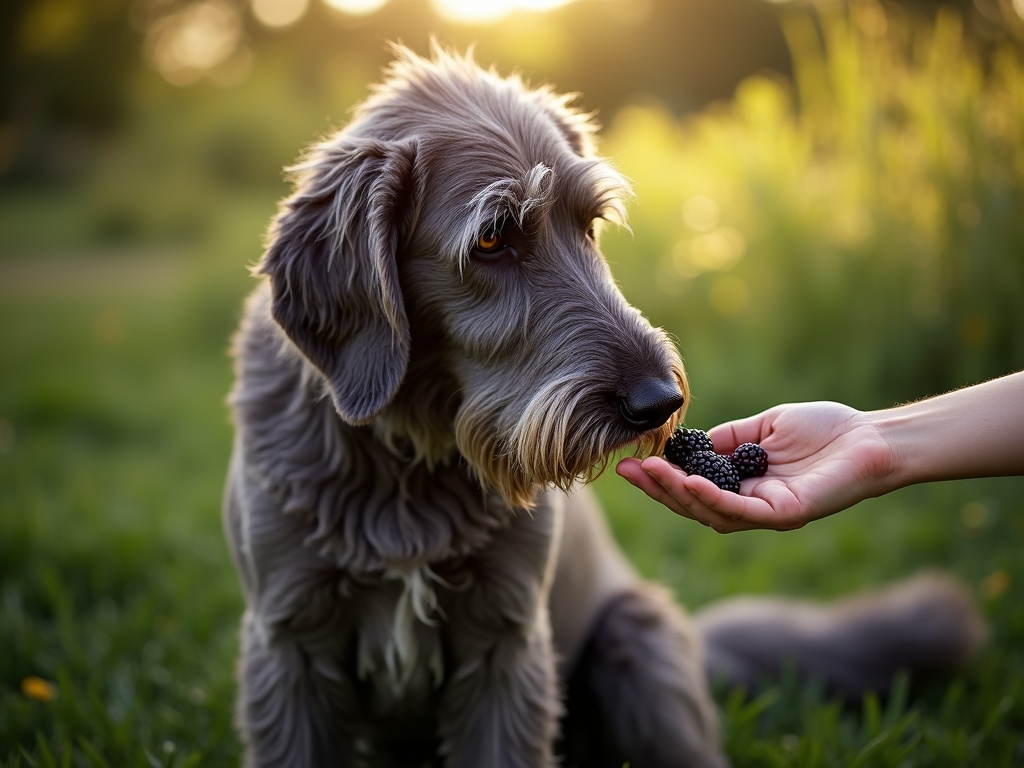

Safe? Yes. Better than raspberries? Depends on what you’re optimising for. Wild ones from the garden? Fine, with a caveat. Here’s the short version before the longer one.
Dogs can eat blackberries. They’re low in sugar, high in fibre, and have one of the better antioxidant profiles of any fruit you’d give a dog. The main thing to manage is quantity — the fibre load can cause loose stools if you go overboard.
What’s actually in a blackberry
Blackberries have a decent nutritional profile. Per 100g, they contain about 43 calories, 5.3g of fibre (notably high for a fruit), 4.9g of sugar, and solid amounts of vitamin C (21mg), vitamin K (19mcg), and manganese. The deep colour comes from anthocyanins, the same compounds that give blueberries their antioxidant reputation.
Compared to raspberries, which we’ve covered separately: blackberries have slightly more sugar (4.9g vs 4.4g per 100g), similar fibre, and a higher vitamin K content. The practical difference for your dog is minimal — both are good low-sugar fruit options, and rotating between them makes more sense than committing to one.
The seeds — worth knowing but not worth worrying about
Blackberries are aggregate fruits made up of many small individual sections called drupelets, each containing a small seed. These seeds contain trace amounts of amygdalin, a compound that converts to hydrogen cyanide when metabolised. If that sounds alarming, the same is true of apple seeds, cherry pits, and many other common fruits.
The amount of amygdalin in blackberry seeds is genuinely tiny. A dog would need to eat an implausible quantity of blackberries — and specifically chew and digest the seeds thoroughly — to approach any problematic threshold. The seeds pass through largely intact in most dogs. This is mentioned not as a warning, but because several readers have asked about it after reading about cyanide in fruit seeds generally. A handful of blackberries is not a concern.
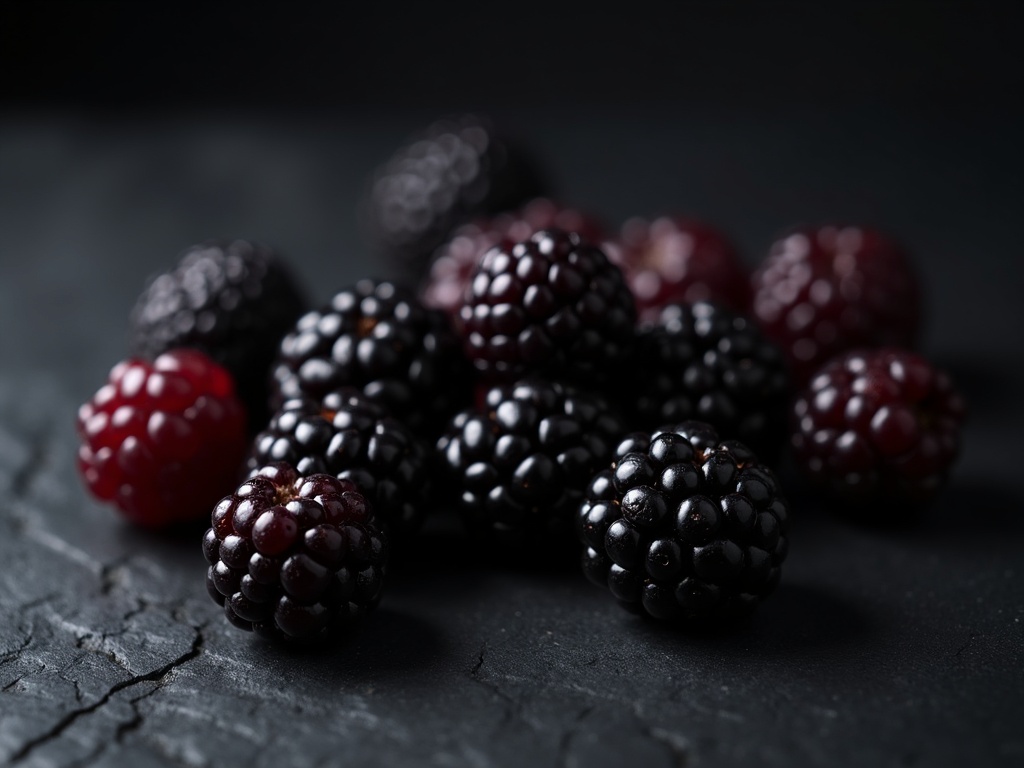
Wild blackberries — yes, but check the location
Wild blackberries (Rubus fruticosus) are the same species as cultivated ones. If your dog snaffles a few off a bush during a walk, that’s fine nutritionally. The things to check:
Pesticides and herbicides. Blackberries growing alongside roadsides or near agricultural land may have been sprayed. Wash any you pick, and be cautious about very exposed locations. Blackberries from a garden you know is spray-free, or from established bushland away from roads, are lower risk.
Other berries that look similar. In Australia particularly, some toxic berries grow alongside blackberry bushes. The ASPCA’s poison control guidance applies to North American varieties, but the principle holds: if you’re not certain what species it is, don’t let your dog eat it. Blackberries are distinctive with their black colour and aggregate structure, but it’s worth knowing your local flora if your dog forages freely.
How many blackberries can a dog eat
The fibre content is the limiting factor — 5.3g per 100g is high for a fruit, and too much fibre at once will cause loose stools. Sugar is less of a concern here than with most other fruits, but still worth tracking if your dog has diabetes or is weight-managed.
| Dog size | Reasonable amount |
|---|---|
| Small (under 10kg) | 2–3 berries |
| Medium (10–25kg) | 5–6 berries |
| Large (25kg+) | 8–10 berries |
A few times a week is sensible. Daily in small amounts is fine for most dogs. First time: give two or three, see how they handle it before offering more.
Frozen blackberries
Frozen blackberries work well as a treat, particularly in summer. The texture changes slightly when frozen — firmer and colder, which most dogs find interesting. They thaw quickly at room temperature if you prefer. Frozen blackberries retain their nutritional value well; freezing doesn’t affect the anthocyanin content in any meaningful way.
They also work in the same yogurt-ice-cube format as raspberries — blend with plain yogurt (no sweeteners, check the label), freeze in an ice cube tray, offer one at a time. The purple stains on white kitchen tiles are admittedly less charming.
Blackberries and dog dental health
Worth a brief mention: the anthocyanins in blackberries have documented antibacterial properties in humans. Whether they translate to meaningful oral health benefits for dogs in treat-sized amounts is not well-studied, but the same mild antibacterial effect that makes dark berries interesting for human dental health probably applies in dogs to some degree.
More practically: blackberries are soft enough that they don’t provide much mechanical cleaning action the way celery or raw carrot might. They’re not a dental treat in the traditional sense — but they’re also not the kind of sticky, sugary snack that actively causes dental problems. Fairly neutral on the teeth, overall.
Blackberries vs raspberries: a quick comparison
Since we’ve covered both, a side-by-side is useful if you’re choosing between them as a regular treat:
| Blackberries | Raspberries | |
|---|---|---|
| Calories (per 100g) | 43 kcal | 52 kcal |
| Sugar | 4.9g | 4.4g |
| Fibre | 5.3g | 6.5g |
| Vitamin C | 21mg | 26mg |
| Vitamin K | 19mcg | 8mcg |
| Natural xylitol | Trace | Trace |
Raspberries have slightly more fibre and vitamin C. Blackberries have significantly more vitamin K. Both have trace xylitol that’s irrelevant at normal treat quantities. Neither is clearly superior — rotate them if you have access to both.
What to avoid
Blackberry jam: high sugar, often preservatives, sometimes artificial sweeteners. Skip it.
Blackberry pie or crumble: contains sugar, butter, and often xylitol-adjacent sweeteners in the pastry. Not for dogs.
Blackberry-flavoured yogurt or drinks: check ingredients carefully. Plain fruit only.
Tinned blackberries in syrup: the syrup adds significant sugar. If tinned, rinse thoroughly and use in small amounts, or use fresh.
Can puppies eat blackberries?
In very small amounts, yes. Puppies have more sensitive digestive systems, so start with one berry and wait to see how they respond. The fibre content that can cause loose stools in adult dogs is even more likely to cause issues in young dogs whose gut flora is still developing. One or two berries occasionally is fine. Don’t make it a daily thing until they’re past six months and digestion has settled.
FAQs
Can dogs eat blackberries every day?
Small amounts daily are fine for most dogs. The fibre and natural sugar add up over time if you’re giving large quantities, but a few berries as part of a daily treat rotation is a reasonable approach. Vary it with other fruits — blueberries and raspberries have similar profiles and work well in rotation.
My dog ate a lot of blackberries from the garden. What should I watch for?
Expect some digestive upset — loose stools and possibly gas from the fibre load. This usually resolves within 24 hours. If symptoms persist beyond a day, or if you’re seeing vomiting or lethargy, call your vet. The berries themselves aren’t toxic, but a large amount of fibre and sugar at once can cause temporary GI discomfort.
Are blackberries better for dogs than blueberries?
Different rather than better. Blueberries have a slightly lower sugar content and are easier to portion. Blackberries have more fibre and higher vitamin K. Both are good options. If your dog has a preference, go with that — from a nutritional standpoint, either is a solid choice.
By Sarah Mitchell · Reviewed by Dr. Marcus Webb, DVM
For more berry options, see our guides on can dogs eat blueberries and can dogs eat raspberries. For a fruit with a more complicated safety profile, can dogs eat grapes is worth reading before you let your dog near a vine.