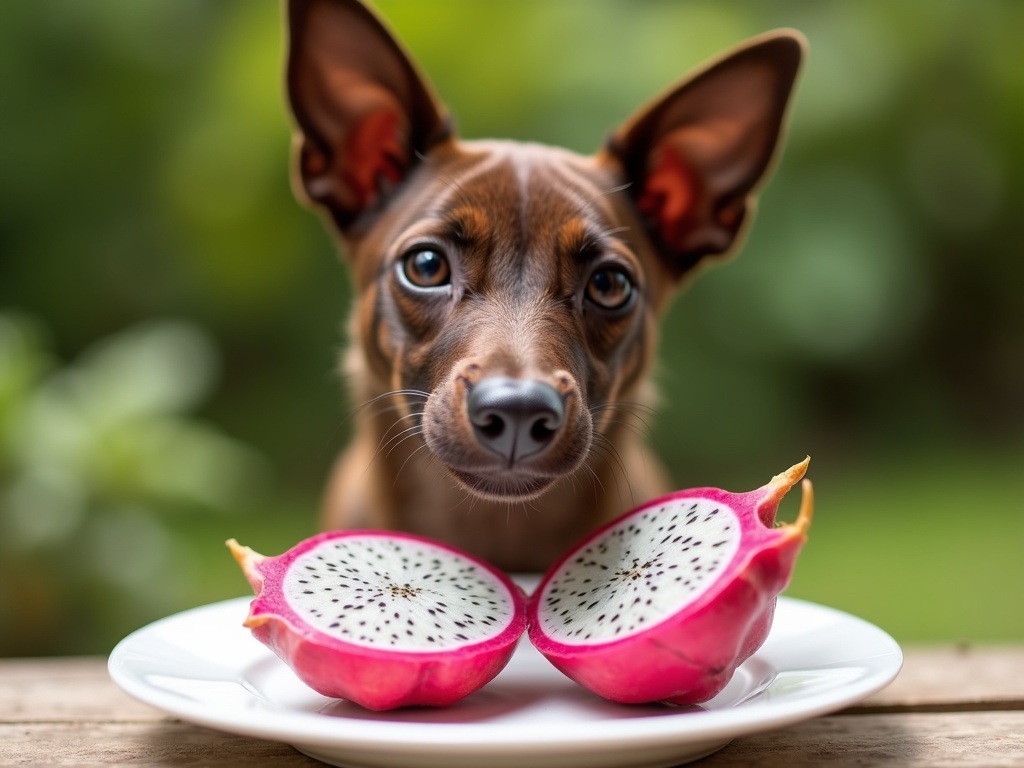

If your dog eats red-fleshed dragon fruit and their urine turns pink or their poo looks alarming an hour later, don’t panic. That’s betacyanin doing its thing — the same pigment that makes beetroot turn everything red. It’s harmless, passes through without being metabolised, and is one of the more surprising things about this fruit. Knowing about it beforehand saves a vet call.
Can dogs eat dragon fruit? Yes. All varieties — white, red, yellow — are safe for dogs in moderate amounts. The skin comes off first, the seeds stay in (they’re tiny and pass through fine), and portions should reflect the sugar content.
The varieties — white, red, yellow
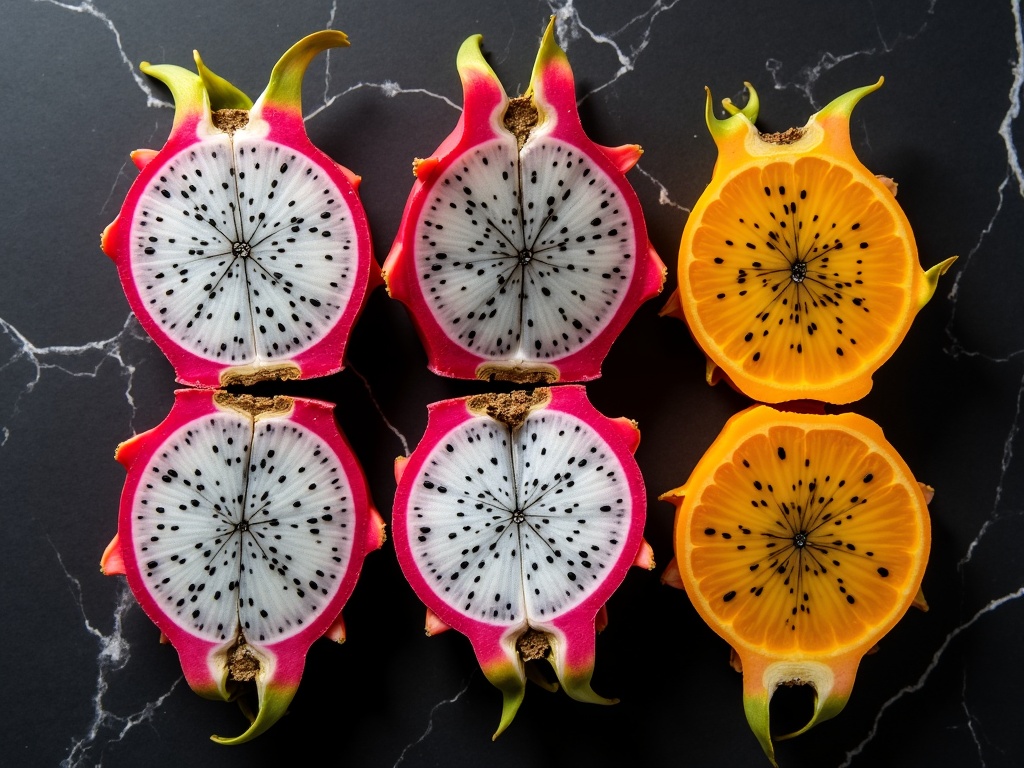
Most people have only seen one type of dragon fruit, but three main varieties show up in Australian supermarkets and markets:
White-fleshed dragon fruit (Hylocereus undatus) is the most common — pink or red skin, white flesh with small black seeds. Mildly sweet, low in sugar compared to the others.
Red-fleshed dragon fruit (Hylocereus costaricensis) has the distinctive deep red or magenta flesh that causes the betacyanin colouring effect. Slightly sweeter than white. The red pigment is water-soluble and excreted unchanged — hence pink urine and red-tinged stools after eating enough of it.
Yellow dragon fruit (Selenicereus megalanthus) has yellow skin and white flesh. Sweetest of the three, and the highest sugar content. Smaller and more expensive, but increasingly available. For diabetic dogs, this is the variety to be most careful with.
Betacyanin — why the red staining happens
Betacyanin is a betalain pigment found in red-fleshed dragon fruit (and beetroot, red amaranth, and some other plants). Humans and dogs lack the enzyme to break it down, so it passes through the digestive system intact. The result: pink or red-tinged urine, and sometimes similarly coloured stools, for several hours after eating red dragon fruit.
This is completely harmless. It’s called beeturia when it happens with beetroot, and the same principle applies here. If you weren’t expecting it, it looks alarming. Now you’re expecting it.
The nutrition numbers
Per 100g, dragon fruit contains about 60 calories, 9g of sugar, 3g of fibre, and useful amounts of vitamin C (20mg), iron (0.65mg), and magnesium (18mg). The iron content is unusual for a fruit — most fruits contribute negligible iron. Dragon fruit has more than most, making it slightly more interesting nutritionally for dogs that occasionally run low.
The seeds are tiny, soft, and packed with polyunsaturated fatty acids — omega-6 and omega-3 in small but meaningful amounts. Unlike most fruit seeds, dragon fruit seeds are genuinely nutritious and there’s no reason to remove them.
The skin — not worth eating
Dragon fruit skin is the distinctive scaly exterior with pointed tips. It’s not toxic to dogs, but it’s tough, fibrous, and practically indigestible. The texture alone puts off most dogs, but if your dog tries to eat it, the main risk is GI irritation from the fibrous material. Peel it off. The flesh is the edible part.
Portions — less than you think
The sugar content (9g per 100g) is similar to blueberries — moderate rather than high. The fibre (3g per 100g) can cause loose stools if you go overboard.
| Dog size | Safe amount (flesh only, skin removed) |
|---|---|
| Small (under 10kg) | 1–2 small cubes |
| Medium (10–25kg) | 3–4 cubes |
| Large (25kg+) | A small handful of cubes |
A few times a week is fine. Dragon fruit is one of the more hydrating fruits available — about 80% water — which makes it a decent hot-weather treat alongside watermelon and cucumber.
Dragon fruit vs other exotic treats
If you’re rotating exotic fruits as treats, it helps to know where dragon fruit sits relative to the others. Compared to mango (60 calories/100g, 14g sugar) — dragon fruit is similar in calories but lower in sugar. Compared to papaya (43 calories, 10.8g sugar) — dragon fruit is slightly higher in both. Compared to kiwi (61 calories, 9g sugar) — nearly identical nutritional profile.
The practical difference: dragon fruit is more available year-round in Australia than papaya (which can be expensive), and it’s less likely to cause enzyme sensitivity than kiwi or papaya. For an exotic treat rotation, white-fleshed dragon fruit is one of the easier options to include regularly.
Canned or packaged dragon fruit
Dragon fruit juice, dragon fruit powder, and dragon fruit in syrup all exist in supermarkets. Avoid all of these. Juice removes the fibre, concentrates the sugar, and often has added sugar besides. Powder is even more concentrated. Syrup-packed pieces have the same issues as tinned fruit generally. Fresh or frozen flesh only.
Frozen dragon fruit
Dragon fruit freezes extremely well. The texture changes slightly — firmer and icier — but most dogs enjoy it. Frozen cubes of white or red dragon fruit work as summer treats. The red variety produces a mildly pink liquid as it thaws, which is just betacyanin again. Not a problem.
Pre-frozen dragon fruit is also widely available in Australian supermarkets in the frozen fruit section, which makes it convenient without the need to prepare fresh fruit. For dogs that don’t react enthusiastically to fresh fruit, the firmer frozen texture sometimes gets a better response.
Skip it if your dog has these conditions
Diabetic dogs: yellow dragon fruit in particular has the highest sugar content of the three varieties. White-fleshed dragon fruit is lower in sugar and a better choice if sugar management matters. Even white-fleshed dragon fruit should be given in small amounts to diabetic dogs.
Dogs on iron-restricted diets: dragon fruit has more iron than most fruits. If your dog is being managed for conditions that require limiting iron intake, check with your vet. For most dogs, this is not a concern — but it’s worth knowing that dragon fruit isn’t nutritionally neutral on iron.
One thing nobody tells you about dragon fruit
The first time you give a dog red-fleshed dragon fruit, you will forget about the betacyanin warning. You will see pink in the toilet area a few hours later. You will briefly consider calling your vet. Then you will remember this article, check the timeline, and realise it lines up perfectly with the dragon fruit you gave them at lunch. This happens to basically everyone who feeds red dragon fruit to their dog for the first time. Consider yourself warned twice.
By Sarah Mitchell · Reviewed by Dr. Marcus Webb, DVM
For other hydrating fruit treats, see our guides on can dogs eat watermelon and can dogs eat cucumbers. For another exotic fruit with enzyme considerations, can dogs eat papaya is worth reading.