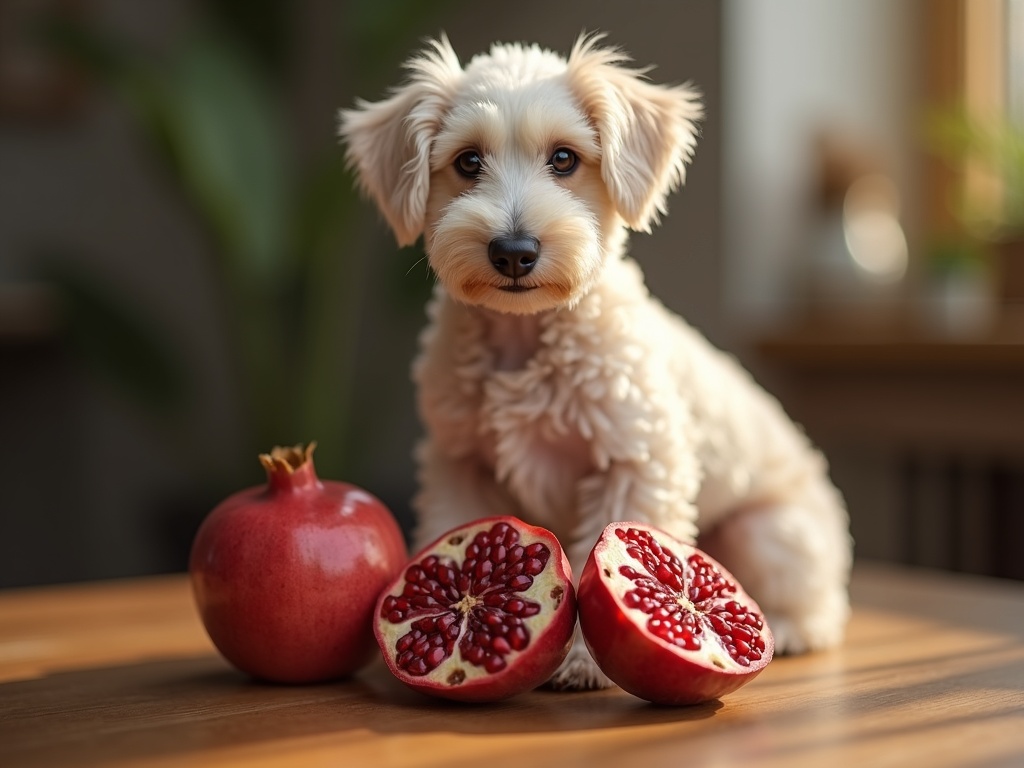

Search for “can dogs eat pomegranate” and you’ll find two completely opposite answers on the first page — one site says it’s a superfood, another says never give it. Both are wrong in their extremes, and the confusion comes from people not distinguishing between three very different parts of the fruit.
The arils — the jewel-like red seed sacs — are safe for dogs in small amounts. The white pith and the tough outer rind are not worth giving, and the rind in particular contains high concentrations of tannins that cause GI irritation. Once you know which part is which, the question gets a lot simpler.
Arils vs seeds vs rind — the distinction that matters
A pomegranate contains three edible-or-not components that get conflated in most guides:
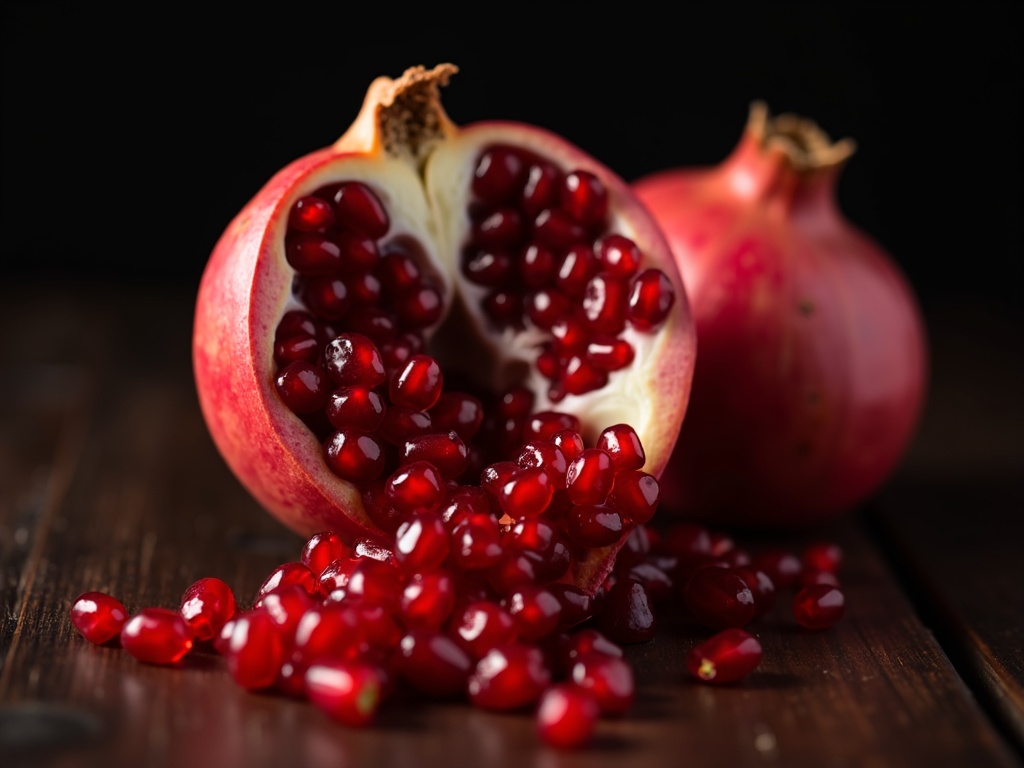
The arils are the red, juicy sacs surrounding each seed. This is the part people eat. For dogs, arils in small amounts are safe. They contain the antioxidants, vitamin C, and fibre that make pomegranate nutritionally interesting. They’re also the only part worth intentionally giving to a dog.
The seeds inside each aril are small, hard, and mostly pass through without issue. They’re not toxic. Some dogs digest them fine; others experience mild GI discomfort from the hard texture. You can remove them if you want, but it’s not necessary for most dogs.
The rind and white pith are where the tannin concentration is highest. Tannins are polyphenolic compounds that bind to proteins and can irritate the digestive tract — causing vomiting, diarrhoea, and abdominal discomfort in dogs. The rind is also very tough and can cause obstruction if swallowed in pieces. Don’t give the rind or pith.
Why one source says “never give” and another says “superfood”
The “never give” position usually comes from articles that don’t distinguish between the rind (genuinely problematic) and the arils (safe). The “superfood” position overstates the benefits of the arils for dogs specifically. Both miss the nuance.
The practical answer: arils in small amounts are fine. Everything else — rind, pith, leaves — skip. And like all fruit treats, portions matter.
What pomegranate arils contain
Per 100g, pomegranate arils contain about 83 calories, 13.7g of sugar, 4g of fibre, 10.2mg of vitamin C, and punicalagins — a type of tannin found specifically in pomegranate that has documented antioxidant activity. Pomegranate has one of the highest antioxidant contents of any fruit, comparable to red wine or green tea in ORAC terms.
For dogs, the antioxidant content is genuinely interesting — oxidative stress plays a role in ageing and inflammation in dogs as it does in humans. Whether treat-sized amounts of pomegranate arils make a measurable difference is not well-studied. The nutritional content is real; the claimed benefits for dogs are extrapolated from human research.
The sugar content (13.7g per 100g) is higher than most fruits on this list — higher than mango, peaches, or kiwi. Portions should be smaller than those for lower-sugar fruits.
How many arils can a dog eat
Given the sugar content and the fact that even the arils contain some tannins, smaller is better here than with most fruits.
| Dog size | Safe amount (arils only) |
|---|---|
| Small (under 10kg) | 5–10 arils |
| Medium (10–25kg) | 15–20 arils |
| Large (25kg+) | Up to a small handful (25–30 arils) |
Occasional treat, not daily. First time: give 5 arils regardless of dog size, wait a few hours, check for GI reaction. Some dogs are more sensitive to tannins than others.
Pomegranate vs blueberries — antioxidant comparison
Pomegranate is often marketed as having the highest antioxidant content of any fruit. In humans, this is roughly accurate for punicalagins specifically. For dogs choosing between pomegranate arils and blueberries as an antioxidant-rich treat, the comparison isn’t as clear-cut.
Blueberries have 9.7g sugar per 100g vs pomegranate’s 13.7g. Blueberries are easier to give (no preparation needed, no rind confusion), have lower sugar, and most dogs eat them without any GI reaction. Pomegranate arils have a distinctive antioxidant profile from punicalagins that blueberries don’t have — but whether that specific compound translates to meaningful benefits in treat quantities for dogs is an open question.
For practical purposes: blueberries are the more convenient choice for regular treats. Pomegranate arils are worth rotating in occasionally for the variety and the antioxidant profile — just in smaller amounts due to the sugar.
Seasonal availability in Australia
Pomegranates are a late autumn and winter fruit in Australia, typically available from March to July. This is the opposite of most berries, which peak in summer. That makes pomegranate arils a useful treat option during the cooler months when blueberries and raspberries are out of season and more expensive. The arils also freeze well — scoop them out, freeze flat on a tray, store in a container. They keep for months and make reasonable cold treats even outside season.
Pomegranate juice
Skip it. Pomegranate juice concentrates the sugar and removes the fibre that slows glucose absorption. Commercial pomegranate juice often has added sugar on top. Even pure, unsweetened pomegranate juice is not a good option for dogs — the sugar hit without the fibre is the opposite of what you want.
Pomegranate in dog food and supplements
Some premium dog foods and supplements include pomegranate extract for its antioxidant properties. This is different from feeding fresh pomegranate — the extracts are processed, standardised, and used in specific amounts. If you see pomegranate on an ingredient label, it’s not a concern. The form and concentration are controlled in ways fresh fruit is not.
Dogs that should avoid pomegranate
Diabetic dogs: at 13.7g sugar per 100g, pomegranate arils are among the higher-sugar treat options. Not a good regular treat for blood glucose-managed dogs. A few arils occasionally is unlikely to cause a crisis, but routine feeding isn’t appropriate.
Dogs with sensitive stomachs or IBS: tannins in the arils can irritate sensitive GI tracts. Some dogs with chronic digestive issues react to pomegranate even in small amounts. Start very small and monitor.
Dogs on iron-chelating medications: tannins bind to iron and can affect absorption. If your dog is being treated for iron deficiency or is on related medications, check with your vet before adding pomegranate to their diet.
FAQs
Can dogs eat pomegranate seeds?
The seeds inside the arils are not toxic. Most dogs digest them without issue; some experience mild GI discomfort from the hard texture. You can remove the seeds if you prefer, but it’s not necessary. The arils themselves — the red juicy sac — are the part that matters.
My dog ate pomegranate rind. What should I watch for?
Watch for vomiting, diarrhoea, and abdominal discomfort over the next 12–24 hours. The rind contains high tannin concentrations and is tough enough to potentially cause GI irritation or, in large pieces, obstruction. A small piece is unlikely to cause serious problems. If your dog ate a significant amount of rind or is showing distress, call your vet.
Is pomegranate toxic to dogs?
The arils are not toxic. The rind and pith contain high tannin concentrations that can cause GI upset — not true toxicity in the way grapes or xylitol cause organ damage, but irritating enough to cause vomiting and diarrhoea. The confusion in online sources comes from treating the whole fruit as a single thing rather than distinguishing the arils from the rind.
By Sarah Mitchell · Reviewed by Dr. Marcus Webb, DVM
For other high-antioxidant fruit options, see our guides on can dogs eat blueberries and can dogs eat blackberries. For another fruit where different parts have very different safety profiles, can dogs eat peaches covers the pit question in detail.