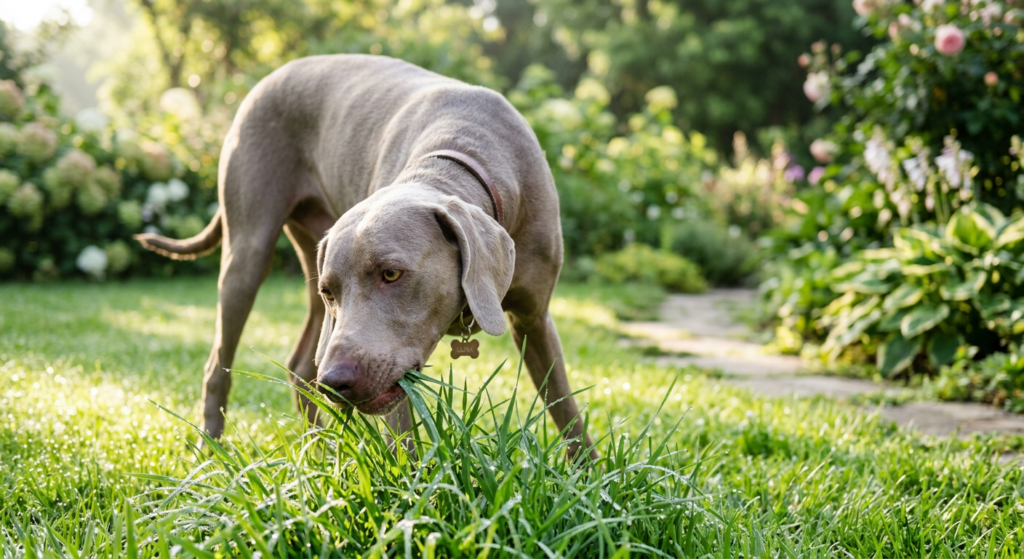

You let the dog out for a morning wee and he goes straight for the garden bed. Not to sniff. Not to patrol the fence. He just… starts eating grass. Methodically. Like he’s got somewhere to be.
Most dog owners have been here. And most of the time, the first thought is something between mild alarm and mild embarrassment — because it looks weird, and somehow also like a personal failure.
Here’s the short version: it’s almost certainly fine. But “fine” doesn’t mean all grass-eating is the same, and that’s where most guides stop being useful.
The timing tells you a lot
There’s a meaningful difference between a dog who grazes casually on a walk and a dog who bolts out first thing in the morning and immediately starts eating grass like it’s urgent.
Morning grass-eating on an empty stomach — often followed by vomiting yellow foam — is almost always about bile. When a dog hasn’t eaten for a while, gastric acid and bile build up in an empty stomach. It’s uncomfortable. Grass triggers the gag reflex, they bring up the bile, and they feel better within minutes.
This is sometimes called bilious vomiting syndrome, and it’s common enough that vets have a name for it. The fix is often simple: earlier dinner, a small snack before bed, or a later breakfast — something to keep the stomach from sitting completely empty overnight.
A dog who eats grass randomly throughout the day, with no urgency and no vomiting? Different situation. Usually just fibre-seeking, boredom, or taste preference. Not a medical thing.
Why dogs eat grass: the actual reasons
Fibre
Grass is roughage. If a dog’s diet is low in fibre, they’ll often seek it out in whatever’s available — and your lawn is available. According to the ASPCA, grass itself isn’t toxic to dogs, and in small amounts functions as a mild digestive aid.
A change to a higher-fibre food often reduces or stops the behaviour entirely. If your dog eats a lot of grass and also seems to strain when passing stool, that’s worth paying attention to.
Boredom and anxiety
This one gets underestimated. Dogs who don’t get enough mental stimulation — or who are left alone for long stretches — sometimes develop repetitive behaviours. Grass-eating can be one of them.
If you notice it’s worse on days when the dog hasn’t been walked, or right before you leave the house, that’s a behavioural thing, not a dietary one. Puzzle feeders, more active play, or working on separation training tends to help more than changing their food.
Instinct
Wild canines ate whole animals, and the stomach contents of prey — which often included plant matter — were part of the meal. Some researchers think grass-eating is a remnant of that, a kind of instinctive roughage-seeking that hasn’t been bred out of dogs despite centuries of domestication.
This is probably the least actionable explanation, but it’s worth knowing: some dogs just do it because something in them says to. If they’re healthy and it’s occasional, that’s likely what you’re dealing with.
Taste
Young, wet grass — especially in spring or after rain — genuinely appeals to some dogs. They’re not sick. They’re not anxious. They just like the taste and texture of fresh grass.
A weimaraner we know does this every spring without fail, eats a few blades, trots off, and shows zero interest in dry summer grass. Same dog, same garden, completely seasonal preference.
Is it actually safe?
Generally, yes — with two exceptions that matter more in Australia than most places.
Snail bait (metaldehyde) is extremely common in Australian gardens and is highly toxic to dogs. It’s often blue or green pellets, and some formulations smell attractive to dogs. If your dog eats grass in areas where snail bait might have been used — a neighbour’s garden, a park, any unfamiliar lawn — that’s a real risk to be aware of.
Treated grass — lawn sprayed with herbicides, pesticides, or fertilisers — is also a concern. Most products are safe once dry, but if you’re not sure about the lawn your dog’s grazing on, it’s worth keeping them away until you are.
Mown grass clippings are a separate issue. They ferment quickly, can contain mould, and tend to be swallowed in larger clumps than when the dog picks individual blades. Some dogs vomit after eating clippings even when the same lawn’s standing grass doesn’t bother them.
What the behaviour probably means
| What you’re seeing | Most likely cause | Worth a vet visit? |
|---|---|---|
| Morning grass-eating, then vomiting yellow foam | Bile buildup on empty stomach | If it happens more than 2–3x a week |
| Grazing on walks, no vomiting | Fibre-seeking or taste preference | No |
| Eating grass obsessively, can’t be redirected | Anxiety, compulsion, or GI discomfort | Yes |
| Grass-eating with other symptoms (lethargy, diarrhoea) | Could be multiple causes | Yes, soon |
| Occasional grazing, otherwise normal | Normal dog behaviour | No |
When to actually worry
Eating grass alone isn’t a red flag. But some combinations are:
- Grass-eating plus blood in vomit or stool
- Grass-eating plus significant weight loss
- Grass-eating plus sudden change in appetite
- Completely new behaviour in an older dog who never did it before
Any of these warrants a vet conversation. Not because grass caused the problem, but because those other symptoms are worth investigating on their own.
If you’re also wondering what your dog can and can’t eat, our guide on cucumbers covers a food that’s actually great for dogs with sensitive stomachs. And if you want to understand portion sizes better, the dog food calculator can help dial in your dog’s daily intake. You might also want to read about why avocado is different — one of the few foods where the answer is a firm no.
Frequently asked questions
Why does my dog eat grass and then throw up?
Most likely because the grass triggered a gag reflex — either intentionally (upset stomach, bile) or as a side effect of eating too fast. Research in Applied Animal Behaviour Science found that fewer than 25% of dogs who eat grass vomit regularly afterward, meaning vomiting isn’t the point for most dogs — it’s just what sometimes happens.
Is it okay to let my dog eat grass every day?
If they’re otherwise healthy, have no digestive symptoms, and the grass is untreated, occasional daily grazing is generally considered normal. Consistent, compulsive eating — where the dog seems unable to stop or is distressed — is different and worth a vet opinion.
Why does my dog eat grass obsessively?
Obsessive grass-eating is different from casual grazing. It’s often linked to anxiety, gastrointestinal discomfort, or occasionally nutritional deficiency. If your dog is eating grass in a way that seems urgent or compelled rather than casual, a vet can help rule out underlying causes.
Reviewed by Dr. Marcus Webb, DVM. This article is for informational purposes. Always consult your vet if you’re concerned about your dog’s behaviour or health.