

One large egg has about 70 calories and packs 6 grams of protein. For a 10kg dog, that’s roughly the protein equivalent of 30 grams of chicken breast. Cheap, easy to prepare, and sitting in most fridges already. No wonder dog owners keep asking about them.
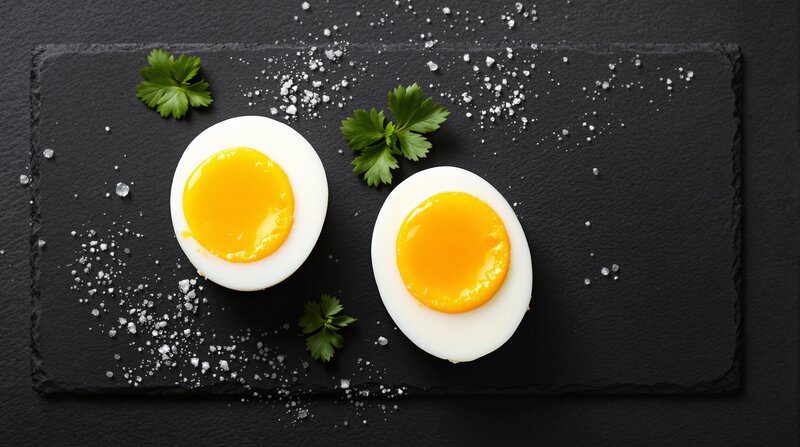
Hard-boiled eggs are safe for dogs. Plain, fully cooked, no seasoning. That’s the quick answer. But eggs have this weird reputation online where half the articles say they’re a superfood and the other half warn about cholesterol and biotin deficiency. Neither side is telling you the whole picture.
The cholesterol thing (it’s overblown)
A large egg contains about 186mg of cholesterol. In humans, that number used to cause panic. The 2015-2020 Dietary Guidelines for Americans actually removed the daily cholesterol limit because research showed dietary cholesterol doesn’t affect blood cholesterol the way we thought.
For dogs, it matters even less. Dogs process dietary cholesterol differently than humans. Their bodies regulate it more efficiently, and they don’t develop atherosclerosis the way people do. Unless your dog has a specific condition like hypothyroidism or pancreatitis, the cholesterol in one egg isn’t going to cause problems.
That said, a 5kg chihuahua getting a whole egg every single day is different from a 35kg labrador getting one. Proportion matters.
What your dog actually gets from an egg
The nutrition breakdown of one large boiled egg (about 50g):
- Protein: 6.3g — complete protein with all essential amino acids
- Fat: 5.3g — mostly monounsaturated (the good kind)
- Vitamin A: 6% of daily value — supports eye health and immune function
- Vitamin B12: 9% DV — critical for nerve function
- Selenium: 22% DV — antioxidant, supports thyroid
- Riboflavin (B2): 15% DV — helps convert food to energy
- Iron: 5% DV — oxygen transport in blood
The protein quality is what makes eggs stand out. Eggs are the reference standard for measuring protein quality in nutrition science — they score 100 on the biological value scale. That means your dog’s body can use almost all of the protein in an egg, unlike some plant proteins where a chunk gets wasted.
Raw eggs: just don’t
Raw eggs come with two problems. First, salmonella. Dogs handle bacteria better than humans, but salmonella can still make them sick — vomiting, diarrhoea, lethargy. Not worth the risk when cooking takes 10 minutes.
Second, raw egg whites contain avidin, a protein that blocks biotin absorption. Biotin (vitamin B7) is essential for healthy skin and coat. One raw egg once won’t cause a deficiency, but feeding raw eggs regularly over weeks could. Cooking denatures avidin completely, so this isn’t an issue with boiled eggs.
Some raw feeding advocates will disagree with this. That’s their call. The veterinary consensus from the AVMA and most vet schools is that cooking eliminates risk without losing meaningful nutrition.
How to serve boiled eggs to your dog
Keep it boring. That’s the rule.
Hard-boil the egg, let it cool, peel it, and either give it whole (for bigger dogs who won’t choke) or chop it into pieces. No salt. No butter. No pepper. No mayo. Anything you’d add for your own breakfast probably isn’t great for your dog.
For small dogs under 10kg, half an egg is plenty as a treat. Medium dogs (10-25kg) can handle a whole egg a few times a week. Large dogs over 25kg can have one daily without issues, though rotating with other healthy treats makes more sense nutritionally.
The eggshell question
You’ll find articles suggesting you crush the eggshell and sprinkle it on your dog’s food as a calcium supplement. Technically, eggshells are almost pure calcium carbonate — about 2g of calcium per shell. That’s legitimate.
But here’s the thing: if your dog eats a complete commercial dog food, they’re already getting adequate calcium. Adding more can throw off the calcium-to-phosphorus ratio, which matters more than total calcium. For puppies especially, excess calcium can cause skeletal development issues in large breeds.
If your dog is on a home-prepared diet and your vet has flagged a calcium shortfall, then sure, ground eggshell (baked at 150C for 10 minutes first to kill bacteria, then ground to a fine powder) works. Otherwise, skip it.

When to hold off on eggs
Eggs aren’t for every dog in every situation:
- Pancreatitis history — the fat content (5g per egg) can trigger flare-ups in sensitive dogs. Ask your vet first.
- Egg allergies — uncommon in dogs, but they exist. Signs include itching, hives, ear infections, or GI upset after eating eggs. If you notice these, stop and talk to your vet.
- Overweight dogs on a restricted diet — 70 calories per egg adds up. That’s roughly 7-10% of a small dog’s daily calorie allowance.
- Dogs with kidney disease — high-quality protein is usually fine, but phosphorus levels in eggs (86mg per egg) might need monitoring.
Scrambled vs boiled vs poached
All cooked methods are fine. The reason boiled gets recommended most often is because it requires zero added fat. Scrambled usually means butter or oil. Poached works too but is more effort for no real benefit over boiling.
Fried eggs are technically okay if cooked without oil in a non-stick pan. But at that point you’re basically making a dry scramble, so just boil one and save yourself the cleanup.
Frequently asked questions
Can I give my dog a boiled egg every day?
For medium to large dogs (over 15kg), a daily egg is generally fine as long as their overall diet is balanced. For smaller dogs, every other day or a few times a week is better to keep calories in check. The AKC recommends treating eggs as a supplement, not a meal replacement.
Should I remove the yolk?
No. The yolk contains most of the egg’s vitamins and nutrients — A, D, E, B12, selenium. Removing it defeats half the purpose. The only reason to give egg whites only would be if your vet has recommended a low-fat diet.
Can puppies eat boiled eggs?
Yes, from about 8 weeks old. Start with small pieces — a quarter of an egg — and watch for any digestive reaction. Puppies have sensitive stomachs, so introduce any new food gradually.
Are boiled eggs good for dogs with dull coats?
Eggs can help. The combination of protein, biotin, fatty acids, and vitamin A supports skin and coat health. Several healthy snacks like cucumber support hydration, but eggs specifically target coat quality through their fatty acid profile. You might notice improvement after a few weeks of regular feeding.
My dog ate a whole egg with the shell. Should I worry?
Probably not, if it was a cooked egg. Eggshell fragments are not sharp enough to cause internal damage — they’ll pass through. Watch for any signs of discomfort or choking with very small dogs. If the egg was raw, monitor for GI upset over the next 24 hours.
Sources: PetMD | AKC | USDA FoodData Central
Related guides: Can dogs eat white rice? | Can dogs eat sweet potato? | Can dogs eat bananas?