

Every vet seems to have the same go-to advice when your dog gets diarrhoea: boil some chicken, cook some white rice, mix them together. It’s become so standard that most dog owners don’t even question it. They just do it.
And it works. Usually. But there’s a gap between “rice is fine when your dog is sick” and “rice is fine as a regular part of your dog’s diet,” and most articles lump them together. They’re not the same situation, and the answer changes depending on which one you’re dealing with.
White rice is safe for dogs. That’s the short version. The longer version involves glycaemic index, arsenic, and the fact that what makes rice good for a sick dog is exactly what makes it mediocre for a healthy one.

The chicken-and-rice thing
If you’ve ever searched “my dog has diarrhoea” at midnight, you’ve seen it. Chicken and rice. The bland diet. Every vet forum, every pet blog, every worried dog owner on Reddit lands on the same answer.
It works because white rice is low in fibre (about 0.4g per 100g cooked) and easy on the gut. When a dog’s digestive system is irritated, you want something that passes through without much friction. White rice does that. The starch also helps bind loose stools, which is why vets don’t recommend brown rice for stomach upsets. The extra fibre in brown rice (1.8g per 100g) can actually make things worse.
The standard ratio most vets suggest is roughly two parts rice to one part boiled chicken breast. No skin, no bones, no seasoning. Plain and boring. Your dog won’t care.
But here’s what people miss: this isn’t a balanced meal. It’s a recovery tool. Chicken and rice lacks calcium, essential fatty acids, and several vitamins your dog needs. Fine for 2-3 days while their stomach settles. Not fine as a permanent diet. If your dog’s stomach issues last more than three days on bland food, that’s a vet visit, not more rice.
White vs brown — it’s not what you’d expect
Most people assume brown rice is healthier. For humans eating a balanced diet, that’s generally true. More fibre, more B vitamins, more minerals. But for dogs, the comparison flips in some interesting ways.
Brown rice keeps its outer husk, which is where the fibre and nutrients live. That same husk is also where arsenic concentrates. Consumer Reports testing found consistently higher arsenic levels in brown rice compared to white. The milling process that strips white rice of its nutrients also strips away most of the arsenic.
For a dog eating rice occasionally as a treat or supplement, arsenic isn’t a real concern with either type. But if rice is a regular part of their diet, mixed into their food a few times a week, white rice is actually the safer long-term choice on the arsenic front.
The other difference that matters for dogs is digestibility. White rice breaks down faster and causes less gas and bloating. For dogs with sensitive stomachs, this matters more than the extra nutrients in brown rice. Those nutrients are available in their regular kibble anyway.
What’s actually in white rice
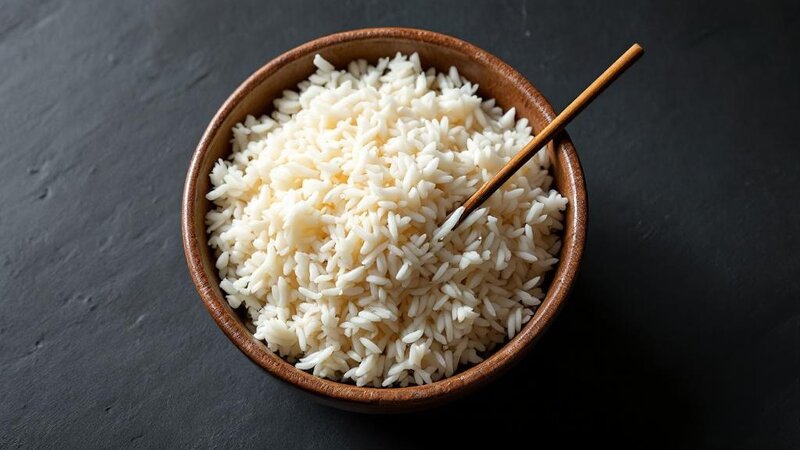
Per 100g of cooked long-grain white rice: 130 calories, 2.7g protein, 0.3g fat, 28g carbohydrates, and 0.4g fibre. Almost no vitamins or minerals to speak of, unless it’s enriched (most white rice sold in Australia, the US, and Europe is).
Enriched white rice adds back some of what milling removes: iron, niacin, thiamine, and folic acid. These aren’t in quantities that will make a meaningful difference to a dog eating commercial food, but they’re not nothing either.
The glycaemic index sits at about 73, which is high. That means white rice causes a faster blood sugar spike than brown rice (GI ~68), sweet potato (GI ~63), or most other carb sources you might give a dog. For a healthy dog having a spoonful of rice with dinner, this doesn’t matter. For a diabetic dog, it does.
Compare it to other foods we’ve covered: sweet potato has 90 calories per 100g with 3g fibre and loads of beta-carotene. An apple has 52 calories with 2.4g fibre and some vitamin C. Rice has more calories and less of everything else. It’s not a nutritional powerhouse. It’s a functional food — it does a job (easy energy, gut binding) and not much else.
Cooking it properly
This sounds obvious, but people get it wrong. Rinsing the rice first removes surface starch and can reduce arsenic levels by up to 30%. Run cold water through it until the water runs mostly clear. Takes about 30 seconds.
Cook it in extra water. The standard home ratio is 1:2 (one cup rice, two cups water), but for dogs, going 1:3 or even 1:4 and draining the excess produces softer, easier-to-digest rice. Some of the remaining arsenic leaches into the cooking water, so draining it rather than letting the rice absorb it all is a small but worthwhile step.
No butter. No salt. No garlic. No onion. Garlic and onion are both toxic to dogs, even powdered versions. This seems straightforward, but leftover rice from dinner often has seasoning cooked into it. If you made garlic rice for yourself, don’t share it with your dog. Cook a separate, plain batch.
Leftover rice is fine if it’s been refrigerated within an hour of cooking and used within 3-4 days. Rice left at room temperature grows Bacillus cereus bacteria surprisingly fast. This applies to dogs just as much as humans.
Portions that make sense
Rice shouldn’t be a main course. It’s a side, a mixer, a treat. The general vet guideline (all treats and extras combined shouldn’t exceed 10% of daily calories) applies here too.
For a small dog (under 10kg), a tablespoon or two of cooked rice mixed into their food is plenty. Medium dogs (10-25kg) can handle a quarter cup. Large breeds (25kg+) can have up to half a cup. These aren’t strict limits; they’re starting points. If your dog handles rice well and isn’t gaining weight, you’ve got some flexibility.
For the chicken-and-rice sick diet specifically, portions are larger because it’s replacing their normal food entirely. Your vet will usually recommend feeding smaller meals more frequently. Four or five small portions spread across the day rather than one or two big ones.

Jasmine, basmati, arborio — does the type matter?
Not really. Long-grain, short-grain, jasmine, basmati — they’re all fine as long as they’re plain white rice. The nutritional differences between varieties are minimal for dogs.
Short-grain rice (like sushi rice or arborio) is stickier because it has more amylopectin starch. Some dogs find the texture easier to eat. Long-grain rice is fluffier and separates more, which mixes better into kibble. Jasmine and basmati are aromatic varieties. Dogs don’t care about the aroma, but there’s no reason to avoid them.
The one type to skip is seasoned rice mixes. Those packets of “Spanish rice” or “pilaf” contain onion powder, garlic powder, and sodium levels that are too high for dogs. If the ingredient list has anything beyond rice and possibly a vitamin fortification, pass on it.
When rice isn’t the right call
Diabetic dogs should avoid white rice as a regular addition. The glycaemic index of 73 means it causes a sharper blood sugar spike than most alternatives. If your diabetic dog needs a bland diet for stomach trouble, your vet might suggest a small amount of brown rice instead, or a prescription GI food.
Overweight dogs don’t need the extra calories. At 130 per 100g, rice adds up faster than fruit or vegetable treats. A tablespoon of rice has roughly the same calories as a cup of watermelon. Choose the one that gives your dog more volume and more nutrients per calorie.
Dogs with chronic GI issues like IBD (inflammatory bowel disease) sometimes react poorly to grains, rice included. If your dog has been diagnosed with a grain sensitivity (which is different from the grain-free diet trend), then rice isn’t suitable. Your vet will have specific recommendations.
And puppies under 8 weeks shouldn’t have rice. Their digestive systems are still developing and they should be on mother’s milk or puppy formula only.
FAQ
Can I feed my dog white rice every day?
You can, but there’s not much reason to. Rice doesn’t offer nutrients that your dog isn’t already getting from their regular food. A few times a week mixed into their meal is fine. Daily is okay too if portions are small, but you’d get more nutritional value from rotating in other foods like sweet potato or pumpkin.
Is instant rice okay for dogs?
Yes. Instant rice is just pre-cooked and dehydrated white rice. It’s slightly lower in nutrients than regular white rice (which is already low in nutrients), but it’s safe. The convenience factor makes it useful if your dog gets sick and you need to put together a bland diet quickly.
My dog ate a lot of rice — should I worry?
Probably not. The most likely outcome is a large, starchy bowel movement and possibly some gas. Rice isn’t toxic in any quantity. If your dog ate seasoned rice containing garlic or onion, that’s more concerning. Watch for lethargy, pale gums, or vomiting and call your vet if anything seems off.
Can I give my dog rice water?
Yes. The starchy water left over from boiling rice (sometimes called congee water or rice water) can actually help with mild diarrhoea. It has a binding effect similar to the rice itself but is easier for a very sick dog to keep down. Serve it at room temperature, not hot.
White rice or brown rice — which is better for dogs?
It depends on the situation. For upset stomachs, white rice wins. Lower fibre, easier to digest, gentler on an irritated gut. For general nutrition as a regular supplement, brown rice has more to offer. For long-term safety, white rice has lower arsenic levels. There’s no single answer; it depends on why you’re feeding rice in the first place.