

You’ve probably already shared apple slices with your dog without thinking twice about it. Most dog owners have. And honestly, that’s fine — apples are one of the safest fruits you can give a dog. Low in calories, crunchy enough to clean teeth a little, and available year-round for practically nothing.
But there’s a catch that gets blown out of proportion online. The seeds. You’ll find dozens of articles warning that apple seeds contain cyanide, which is technically true. What they don’t tell you is that a 10kg dog would need to chew and swallow the seeds from roughly 200 apples in one sitting to reach a toxic dose. One apple core isn’t going to send your dog to the emergency vet.
That said, it’s still smart to core the apple before sharing. Not because of cyanide panic, but because the core is hard, awkward to chew, and a choking risk for smaller dogs.
The seed thing — let’s actually do the maths
Apple seeds contain amygdalin, which releases hydrogen cyanide when crushed. Sounds alarming. Here’s the reality:
Each apple seed contains about 0.6mg of amygdalin. An average apple has 5-8 seeds. The lethal dose of hydrogen cyanide for a dog is roughly 2mg per kilogram of body weight. But amygdalin doesn’t convert 1:1 into cyanide — the conversion rate is about 6%.
So for a 10kg dog to reach a dangerous dose, they’d need around 3,300mg of amygdalin. At 0.6mg per seed, that’s 5,500 seeds. About 700-1,100 apples.
An Australian vet clinic (Walkerville Vet) put it well: they’ve seen dogs eat apple cores for years without any issues. The concern is real in theory but irrelevant in practice for the odd apple.
Still, why risk it? Remove the core, toss it in the bin, give your dog the good parts. Takes five seconds.
What your dog actually gets from an apple
A medium apple (about 180g with the skin) runs around 95 calories, which is lower than most treats. The fibre content is what makes it worth talking about — 4.4g, with the soluble fibre (pectin) doing double duty by helping firm up loose stools. You also get 8.4mg of vitamin C, some vitamin A from the skin, and small amounts of potassium and calcium.
That fibre is actually the most practical benefit. It’s enough to make a difference for dogs with mild digestive irregularity, without being so much that it causes problems. Compare that to a banana (1.3g fibre per 100g) or blueberries (2.4g per 100g) — apples hold up well.
Sugar sits at about 10g per 100g, versus 12g for bananas and 14g for mango. For a treat you can give regularly without worrying about weight gain, apples are a solid pick.
Portions — keep it boring
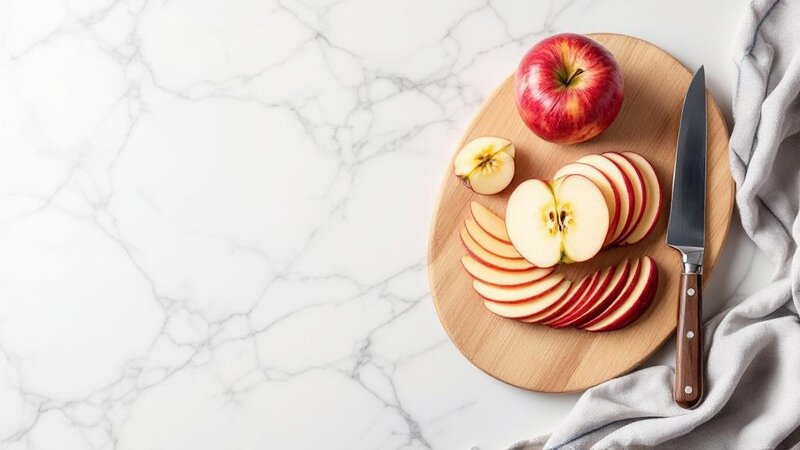
There’s no magic formula here. A couple of slices for a small dog. Three or four for a medium dog. Half an apple for a large breed, maybe a few times a week. Skin on is fine — that’s where most of the fibre and vitamin A lives.
Some dogs prefer them cold from the fridge. Others like them at room temperature. A few dogs will only eat apples if you cut them into tiny cubes (because apparently slices are beneath them). Whatever works.
Frozen apple slices work as a summer treat. They’re harder, so they last longer and give your dog something to gnaw on. Just watch smaller dogs with frozen chunks — the hardness can be a problem for small teeth.
Cooked, dried, or juice — what about other forms?
Plain baked apple (no sugar, no cinnamon, no butter) is fine. It’s softer, which can be good for older dogs or puppies.
Dried apple rings — only if they’re unsweetened. Commercial dried apples often have added sugar or preservatives. Check the ingredients. If the only ingredient is “apples,” you’re good.
Apple juice is a no. Too much sugar, no fibre, and most store-bought juice has added sweeteners. Your dog doesn’t need fruit juice.
Applesauce falls somewhere in the middle. Unsweetened applesauce in small amounts is okay. It’s sometimes recommended mixed with medication because dogs find the taste appealing. But it’s not something to give regularly — the processing removes most of the fibre that makes whole apples worthwhile.
Green vs red — does it matter?
Not really. Granny Smiths are slightly more tart and have a fraction less sugar. Red Delicious and Galas are sweeter and most dogs prefer them. Fuji, Honeycrisp, Pink Lady — all fine.
The only variety consideration is size. A large Bramley cooking apple has more flesh (and more sugar total) than a small Gala. Adjust portions accordingly, but the nutritional differences between varieties are minimal for dogs.
When apples aren’t a good idea
Diabetic dogs should go easy. Apples aren’t high-sugar as fruits go, but they’re not sugar-free either. If your dog is on a controlled diet for diabetes, check with your vet about whether apple fits.
Dogs with chronic kidney disease sometimes need to limit potassium. Apples aren’t particularly high in potassium (107mg per 100g, versus 358mg for bananas), but it’s worth mentioning to your vet if your dog is on a renal diet.
And some dogs just don’t like them. That’s fine. Not every dog is a fruit dog. If yours turns their nose up at apple slices, don’t force it — there are plenty of other healthy treats.
FAQ
Can puppies eat apples?
Yes, from about 8-10 weeks old. Cut them small. Puppies are more likely to try swallowing chunks whole, so tiny cubes are safer than slices. Start with a piece or two and see how their stomach handles it.
My dog ate an entire apple including the core — should I worry?
Probably not. One apple core contains a negligible amount of amygdalin. Watch for signs of discomfort (vomiting, lethargy, difficulty breathing) over the next few hours. If your dog seems fine after 4-6 hours, they almost certainly are. The bigger risk was choking on the core itself, but if they got it down, the concern has passed.
Are apple seeds actually dangerous?
In massive quantities, yes. In the amounts found in one or two apples, no. A dog would need to chew and ingest seeds from hundreds of apples to reach a toxic dose. The seeds also have a hard coating that often passes through the digestive tract intact.
Can dogs eat apple skin?
Yes, and they should. The skin contains most of the fibre and a fair amount of the vitamins. Just wash the apple first — pesticide residue on conventional apples can be a mild irritant. If you buy organic, this isn’t a concern.
How often can I give my dog apples?
A few times a week is perfectly reasonable. Apples are low enough in sugar and calories that daily is fine too, as long as the portion is small and it’s not replacing their regular food. The general vet guideline is that all treats combined shouldn’t exceed 10% of daily calories.