
Your dog’s nose hits the ground mid-walk. Something small and pale, half-hidden in the grass. Before you can react, they’ve sniffed it. Maybe eaten it. And now you’re standing there, leash in hand, going through every worst-case scenario.
If that mushroom came from a supermarket shelf, you can probably relax. If it came from the ground on that walk, this is worth taking seriously.
Can dogs eat mushrooms? Store-bought: yes, in small amounts. Wild: no, and if it just happened, call someone now.
If your dog just ate a wild mushroom
Don’t wait for symptoms. Call your vet or the ASPCA Animal Poison Control Center at (888) 426-4435. They’re available 24/7, and the type of mushroom changes everything about treatment.
Take a photo of it. Bring a sample in a paper bag (not plastic — moisture degrades it). Don’t try to identify it yourself.
Store-bought varieties: what’s safe
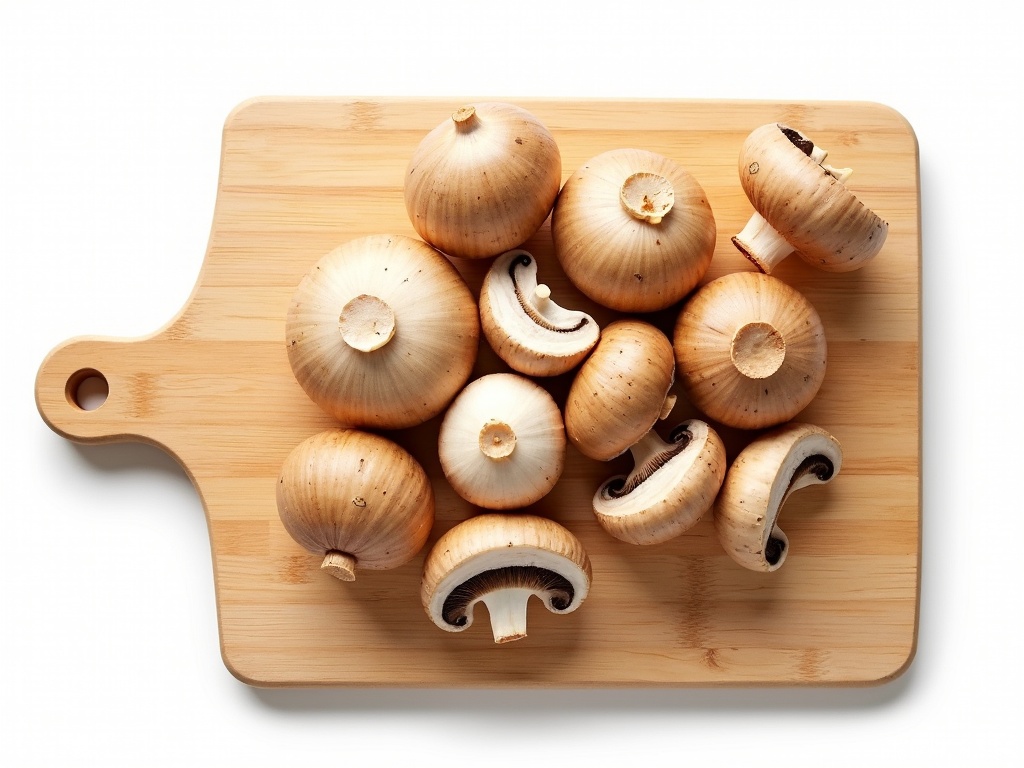
Button, portobello, cremini, shiitake, oyster — all fine for dogs. Same species humans eat, grown in controlled conditions, without the toxins found in wild varieties.
Nutritionally, they’re decent. A 100g serving of raw button mushrooms has about 2.5g protein, 1g fibre, and useful amounts of selenium, potassium, and B vitamins — riboflavin, niacin, that sort of thing. Not a superfood, but not empty calories either.
| Variety | Notes |
|---|---|
| Button (white) | Most common, low calorie, fine raw or cooked |
| Cremini (brown) | Slightly earthier flavour, same safety profile |
| Portobello | Mature cremini, cut into smaller pieces |
| Shiitake | Safe, but cook them — raw shiitake occasionally causes skin rash |
| Oyster | Mild, easy to digest |
One thing most guides skip: raw versus cooked actually matters here. Mushrooms have tough cell walls made of chitin — the same material in insect exoskeletons. Dogs can’t break it down efficiently, so raw mushrooms pass through largely undigested. Cooking breaks those walls open, making nutrients available. Some raw varieties also contain monomethyl hydrazine, which becomes less of a concern after cooking.
Also: no seasoning. Garlic, onion, butter, salt — all common in mushroom dishes, all problematic for dogs.
The ones that actually kill
About 99% of mushroom species are non-toxic, but dogs aren’t good at identifying the remaining 1%. The problem is that toxic species often look like edible ones and grow in the same places.
Amanita phalloides, the Death Cap, causes the majority of fatal mushroom poisonings in dogs and humans worldwide. It contains amatoxins, which block RNA polymerase II — essentially shutting down protein synthesis in liver and kidney cells. There’s no antidote, and it takes very little to cause fatal damage.
Inocybe and Clitocybe species contain muscarine, which triggers excessive salivation, tears, and urination (called SLUDGE syndrome). Rarely fatal but miserable and needs vet treatment.
Amanita muscaria — the red-and-white spotted one from fairy tales — contains ibotenic acid and muscimol, causing disorientation, tremors, and sometimes seizure-like activity.
Symptom timeline (the part most owners don’t know)
Amatoxin poisoning from Death Cap has a pattern that catches people off guard. In the first six hours: vomiting, diarrhoea, abdominal pain. Looks like standard food upset. Then — this is the part that matters — symptoms seem to resolve. The dog appears to recover. This window of apparent recovery lasts roughly 6 to 24 hours while the toxin quietly damages liver and kidney cells. Then, between 24 and 72 hours, acute organ failure.
If your dog ate a wild mushroom, had GI symptoms, and then seemed fine — go to the vet anyway. The seeming-fine part is the dangerous part.
Muscarine poisoning from Inocybe or Clitocybe moves faster, usually within 15–30 minutes. Amanita muscaria symptoms tend to appear within 30–90 minutes.
How much store-bought mushroom is safe
Treats should generally stay under 10% of daily calories. For plain cooked mushrooms, small amounts a few times a week is fine — not an everyday bowl addition.
Small dogs under 10kg: one or two small pieces. Medium dogs between 10 and 25kg: a few pieces. Large dogs above 25kg: up to a small handful. Start small the first time regardless — some dogs have sensitive stomachs.
What about mushrooms in dog food?
Some commercial foods include mushroom extract — usually shiitake or maitake — for beta-glucan content, which has some backing for immune support. This is fine. The amounts are small and the extraction process removes most concerns around raw mushrooms. If you see it on an ingredient label, it’s not something to worry about.
FAQs
Can dogs eat cooked mushrooms from a stir-fry or pasta?
Only if they’re completely plain — no garlic, onion, salt, butter, or sauce. Most cooked mushroom dishes season in ways that are harmful to dogs. Safest approach: cook a small amount separately with nothing added.
My dog ate a mushroom on a walk and seems fine. Do I still need to call the vet?
Yes, if you didn’t see exactly what species it was. With amatoxin poisoning, dogs can look completely normal for 6–24 hours before organ damage becomes visible. “Seems fine” isn’t a reason to wait.
Are there any store-bought mushrooms dogs should avoid?
Skip anything pre-seasoned, pickled, canned in brine, or cooked in onion or garlic. Truffle oil is also worth avoiding — it’s usually synthetic and there’s no reason to give it to a dog.
By Sarah Mitchell · Reviewed by Dr. Marcus Webb, DVM
For other foods with complicated safety profiles, see our guides on can dogs eat grapes and can dogs eat avocado. Dogs that eat things on walks might also prompt the question of why dogs eat grass.