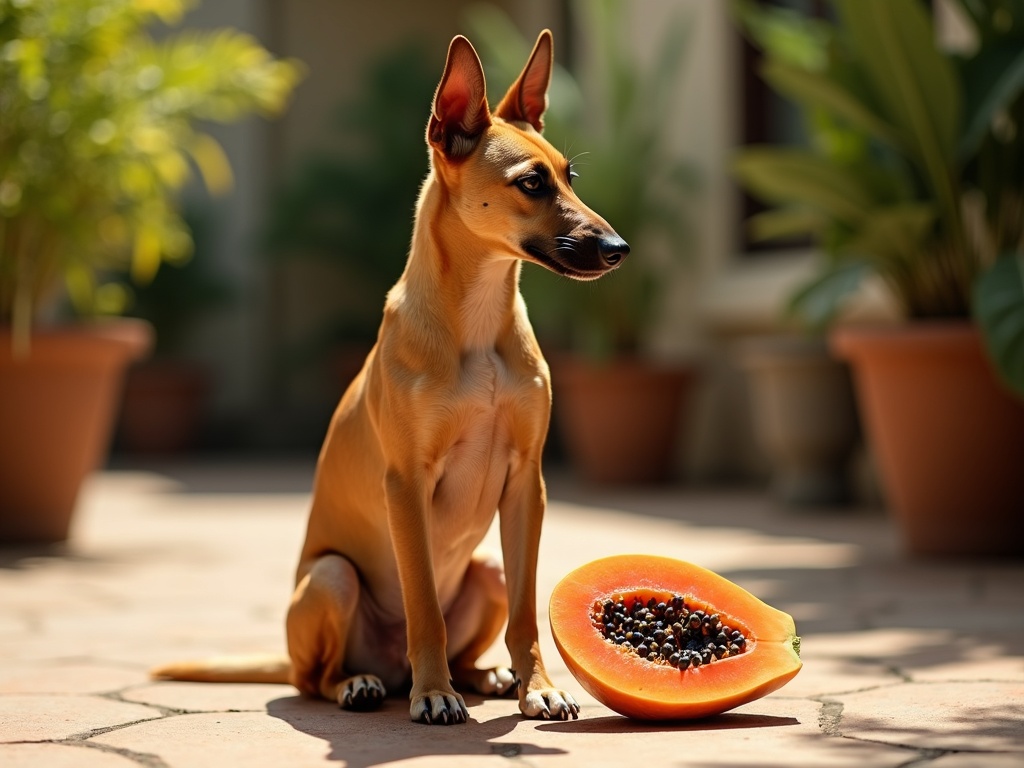

Ripe papaya: fine for dogs. Green papaya: a different story. Most articles on this topic treat papaya as a single thing — they don’t. The difference between ripe and unripe papaya is significant enough that it changes the answer for some dogs, and it’s something almost no guide bothers to explain.
Can dogs eat papaya? Yes, ripe papaya in moderate amounts is safe and reasonably nutritious. Remove the seeds and skin before giving any. And if you’re buying green papaya for a Thai salad or som tam, keep it away from the dog entirely — the enzyme concentration in unripe papaya is a different matter.
Green papaya vs ripe papaya — why it matters
Papaya contains papain, a proteolytic enzyme that breaks down proteins. In ripe papaya, papain concentrations are relatively low — the fruit has softer flesh and the enzyme activity decreases as the fruit matures. In green (unripe) papaya, papain levels are significantly higher, concentrated enough to cause genuine digestive irritation.
In humans, green papaya is used as a meat tenderiser precisely because of this enzyme activity. In dogs, that same concentration can cause vomiting, diarrhoea, and oral irritation. Some dogs with more sensitive stomachs react to ripe papaya as well, though this is less common.
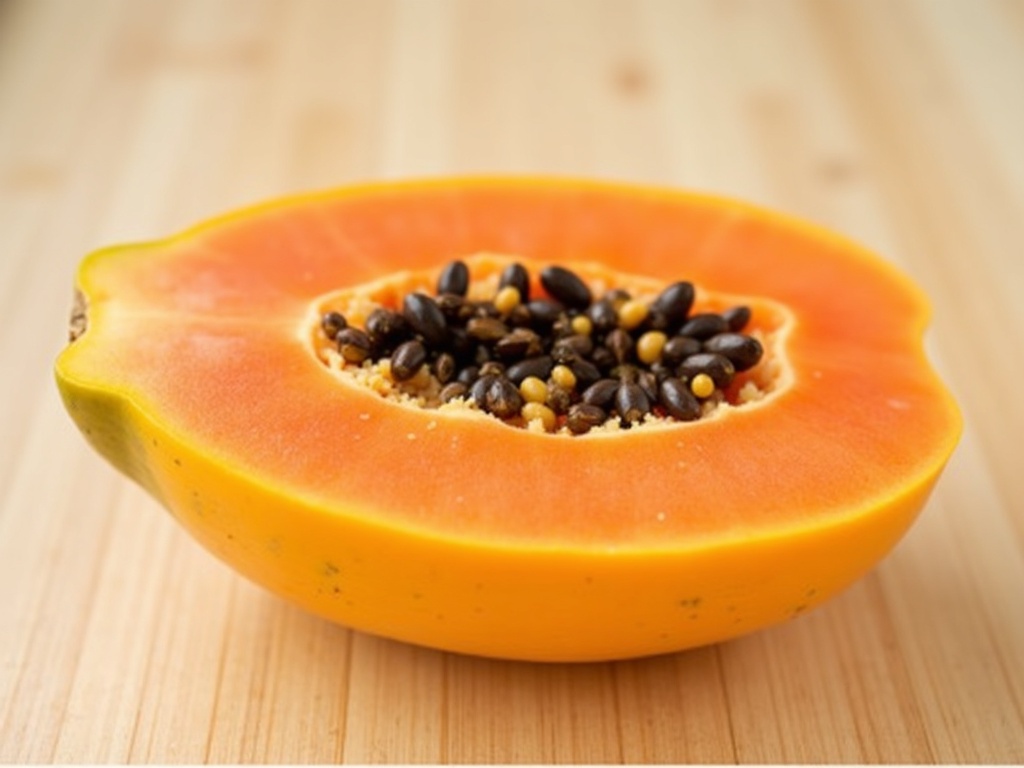
The practical rule: only give ripe papaya (orange-yellow flesh, gives slightly when pressed). If in doubt, don’t.
The seeds — and why to remove them
Papaya seeds look harmless but contain carpain, an alkaloid that can be toxic in larger amounts. The seeds also have a strong peppery taste that most dogs find unpleasant, and the hard texture can cause GI irritation.
Some sources suggest that papaya seeds have antiparasitic properties and are used as a natural worming treatment in traditional medicine — there’s limited research on this in dogs, and the amounts needed to have any effect are well above treat quantities. Don’t use papaya seeds as a worming substitute. Remove them before giving any papaya to your dog.
What’s in ripe papaya
Per 100g, ripe papaya contains about 43 calories, 10.8g of sugar, 1.7g of fibre, and notable amounts of vitamin C (61mg), vitamin A (47mcg), folate (37mcg), and potassium (182mg). The vitamin C content is solid — higher than most common fruits. It also contains beta-carotene, which converts to vitamin A and supports skin and coat health.
The papain itself, at ripe concentrations, may aid protein digestion in dogs — it’s sometimes used in digestive enzyme supplements for pets. Whether a few pieces of fresh papaya provide a meaningful digestive benefit is debatable, but it’s not implausible.
Skin — remove it
Papaya skin is not toxic, but it’s tough, difficult to digest, and can cause GI upset. It also tends to have a latex-like sap on the surface that some dogs react to. Peel the papaya before giving any to your dog. The flesh is the part worth eating anyway.
How much papaya can a dog have
The sugar content (10.8g per 100g) is higher than most berries and similar to mango — portions should reflect this, particularly for diabetic dogs or those on weight management.
| Dog size | Safe amount (ripe, peeled, seeded) |
|---|---|
| Small (under 10kg) | 1–2 small cubes (about 30g) |
| Medium (10–25kg) | 3–4 cubes (about 60g) |
| Large (25kg+) | A small handful of cubes (about 100g) |
A few times a week as an occasional treat. First time: one small cube, wait a few hours, check for GI reaction before offering more. Some dogs are sensitive to papain even in ripe papaya — it’s in the same enzyme family as actinidain (kiwi) and bromelain (pineapple).
Dried papaya
Skip it. Dried papaya has concentrated sugar (often 50g+ per 100g) and is frequently sold with added sugar on top of that. Some commercial dried papaya products also contain sulphur dioxide as a preservative. Fresh or frozen is the only form worth giving a dog.
How papain actually works in a dog’s gut
Papain is a cysteine protease — it breaks peptide bonds in proteins, which is why raw papaya is used as a meat tenderiser in cooking. In a dog’s digestive tract, papain supplements what the pancreas already produces: proteolytic enzymes that break food down into absorbable amino acids.
Where this gets practical: dogs with mild protein maldigestion — soft stools, occasional bloating after meals, visible undigested food in stool — sometimes benefit from the additional enzymatic activity that papain provides. The effect is modest at treat-sized amounts of fresh papaya, but measurable in studies using concentrated papain supplements.
Papain also has a mild stool-softening effect. The combination of enzyme activity and the fruit’s fibre content (1.7g per 100g) means that papaya can help dogs with occasional constipation. A few cubes of ripe papaya after a meal acts as a gentle digestive aid — not a laxative, but enough to improve transit time for dogs that tend toward harder stools.
The flip side: dogs that already have loose stools should avoid papaya entirely. The enzyme activity and fibre will make things worse, not better.
Papain supplements vs fresh papaya
Pet stores sell papain-based digestive enzyme supplements (often labelled as “papaya enzyme chews” or “digestive enzyme blend”). These contain concentrated papain at standardised doses — typically 50-100mg per chew, compared to roughly 0.5-1mg of active papain in a typical serving of ripe papaya.
The difference matters. A digestive supplement delivers a therapeutic dose; fresh papaya delivers a trace amount with some fibre and vitamins alongside it. Fresh papaya is a decent treat with mild digestive benefits. It is not a replacement for a proper enzyme supplement if your dog has been diagnosed with exocrine pancreatic insufficiency or chronic maldigestion.
If your dog has persistent digestive issues, a vet visit is more useful than a fruit-based intervention.
Can dogs eat canned or tinned papaya?
Tinned papaya is usually packed in syrup, which adds significant sugar on top of the fruit’s already moderate sugar content. If the only option is tinned, rinse the pieces thoroughly and give a very small amount. Fresh or frozen is always preferable. Frozen papaya chunks (pre-seeded, pre-peeled) make a good summer treat and are widely available in most Australian supermarkets.
Papaya enzyme supplements for dogs
Papain-based digestive supplements for dogs exist and are generally considered safe when used as directed. These are not the same as feeding fresh papaya — the concentration and formulation are different. If your dog has digestive issues, speak to a vet rather than self-treating with fresh papaya or over-the-counter enzyme supplements.
Dogs that should be more careful with papaya
Diabetic dogs: at 10.8g sugar per 100g, papaya is one of the higher-sugar fruits on the treat list. Small amounts occasionally are unlikely to cause a crisis, but it should not be a regular treat for diabetic dogs without vet input.
Dogs on blood thinners: papain has mild anticoagulant properties. If your dog is on warfarin or other anticoagulant medication, check with your vet before adding papaya to their diet.
Dogs with latex allergy: papaya contains chitinases, proteins that can cross-react with latex. This is rare in dogs but documented. If your dog has known latex sensitivity, introduce papaya with caution.
FAQs
Can dogs eat papaya seeds?
No. Papaya seeds contain carpain, an alkaloid that can be toxic, and the peppery taste makes them unpleasant for most dogs anyway. Remove all seeds before giving papaya to your dog. A seed or two accidentally consumed is unlikely to cause problems, but there’s no reason to include them.
Can dogs eat green papaya?
Not recommended. Green papaya has much higher concentrations of papain than ripe papaya, which can cause digestive irritation and oral discomfort. Only give ripe papaya — orange or yellow flesh that gives slightly when pressed.
Can dogs eat papaya skin?
Technically not toxic, but not worth giving. The skin is tough, difficult to digest, and the sap can irritate some dogs’ mouths and stomachs. Peel it off. The flesh is the part that’s actually useful as a treat.
My dog ate a piece of papaya with seeds. What should I watch for?
A small amount of seeds accidentally consumed is unlikely to cause serious problems. Watch for vomiting, diarrhoea, or lethargy over the next 12–24 hours. If your dog ate a significant amount of seeds or the whole fruit with skin and seeds intact, call your vet for guidance.
By Sarah Mitchell · Reviewed by Dr. Marcus Webb, DVM
For other tropical fruit options, see our guides on can dogs eat mango and can dogs eat pineapple. For another fruit where the enzyme content matters, can dogs eat kiwi covers the actinidain question in similar detail.