

Mango is one of those fruits where the answer comes with a big asterisk. The flesh? Totally fine, and packed with vitamins. The pit? Genuinely dangerous — it contains cyanide and is a real choking hazard. If you’re going to share mango with your dog, you need to know which parts are safe.
Is mango safe for dogs?
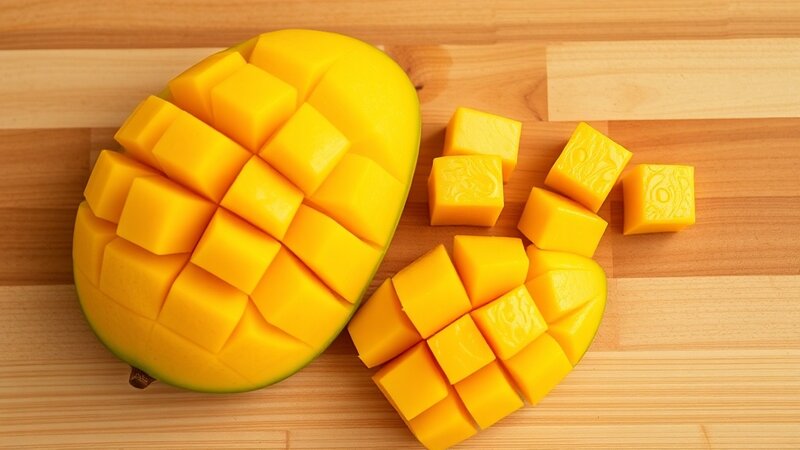
The soft orange flesh? Totally fine. Dogs can eat it, most of them love the sweet taste, and it’s got more vitamins than most fruits you could give them.
What you need to worry about:
- The pit — contains amygdalin, which turns into cyanide when chewed. It’s also big enough to block a dog’s intestines or get stuck in their throat.
- The skin — has urushiol in it, the same stuff that makes poison ivy itchy. Some dogs won’t react, but others will get mouth irritation or stomach problems.
So: flesh only, always peeled, pit gone.
What makes mango good for dogs?
Mango packs a lot into a small serving:
- Vitamin A — good for eyes, skin, and immune system. One cup gives a human about 25% of their daily needs, and it’s proportionally meaningful for dogs too
- Vitamin C — dogs make their own, but extra can help older dogs or dogs under stress
- Vitamin E — protects cells, especially good for coat and skin
- Vitamin B6 — brain function and red blood cell production
- Potassium — heart and muscle function
- Fibre — helps with digestion in the right amounts
The downside: mango has roughly 23g of sugar per cup. That’s almost double what’s in bananas and nearly four times the sugar in watermelon. Portions matter a lot with this one.

How much mango can a dog eat?
Less than most other dog-safe fruits, because of the sugar. The 10% treat rule still applies.
| Dog size | Weight | How much mango | How often |
|---|---|---|---|
| Small (Chihuahua, Pomeranian) | Under 10kg | 1–2 small cubes | 1–2 times a week |
| Medium (Beagle, Cocker Spaniel) | 10–25kg | 3–4 cubes | 2–3 times a week |
| Large (Labrador, Golden Retriever) | 25–40kg | Up to 1/4 mango | 2–3 times a week |
| Extra large (Great Dane, Mastiff) | Over 40kg | Up to 1/3 mango | 2–3 times a week |
These are quite a bit smaller than watermelon portions, and that’s because of the sugar. A quarter of a mango already has about 6g of sugar in it.

Why the pit is a real problem
This isn’t a “mildly concerning” situation — a mango pit can be a genuine emergency:
- Choking — it’s large, smooth, and slippery. Dogs that gulp their food are at serious risk
- Intestinal blockage — if swallowed, it can get stuck. This usually means surgery
- Cyanide — the pit contains amygdalin. If a dog cracks through the hard shell and chews the inside, it releases hydrogen cyanide. Strong chewers can definitely manage this
- Cracked teeth — the pit is rock-hard, and aggressive chewers can break teeth on it
If your dog swallows a mango pit, call your vet or emergency animal hospital right away. Don’t wait for symptoms to show up. Watch for repeated vomiting, loss of appetite, straining to go to the toilet, stomach pain, or unusual tiredness.
What about mango skin?
Better to skip it. That urushiol (the poison ivy chemical) doesn’t affect every dog, but when it does, you’ll see mouth irritation, drooling, itching around the face, or stomach upset.
Even without an allergic reaction, the skin is tough and doesn’t digest well. Just peel the whole thing before you give any to your dog.
Ways to serve mango
- Fresh cubes — peel it, take out the pit, cut into small pieces. Easiest option.
- Frozen chunks — freeze peeled cubes for a summer treat. The cold firms up the soft flesh, which also means less mess.
- Blended with yoghurt — mix mango with plain unsweetened yoghurt and a few blueberries. Pour into ice cube trays and freeze.
- Mashed on top of food — a spoonful of mashed mango on their regular meal adds flavour and some extra vitamins.
Skip dried mango with added sugar, mango chutney, mango juice, or anything processed. The extra sugars, preservatives, and spices aren’t good for dogs.
Getting the prep right
Mango takes more work than most dog-safe fruits, and cutting corners here is how accidents happen. Here’s a method that works well:
- Stand the mango upright on a cutting board. The pit runs vertically through the centre
- Slice down about 1cm off-centre on each side — you’ll feel the knife glide past the pit
- Score the flesh of each cheek into a grid pattern, then scoop out the cubes with a spoon
- Cut away any flesh still clinging to the pit, but toss the pit straight in the bin
- Peel any skin off the cubes — a vegetable peeler works, or just use your fingers on a ripe mango
The whole thing takes about two minutes once you’ve done it a few times. Some people store prepped mango cubes in the freezer so they’ve always got dog-safe portions ready without the hassle of cutting a fresh one each time.
When to skip the mango
- Diabetic or overweight dogs — too much sugar per serving
- History of pancreatitis — sugary foods can trigger flare-ups
- Puppies under 8 weeks — wait until they’re on solid food
- Food allergies — mango allergies in dogs are rare but they exist. Start with one small piece and see what happens
How mango compares to other fruits
| Fruit | Sugar/cup | Calories/cup | Best vitamin | Risk level |
|---|---|---|---|---|
| Mango | 23g | 99 | Vitamin A and C | Medium (pit) |
| Banana | 14g | 105 | Potassium | Low |
| Watermelon | 9g | 46 | Lycopene | Low (seeds/rind) |
| Strawberries | 7g | 49 | Vitamin C | Low |
| Blueberries | 15g | 85 | Antioxidants | Very low |
Mango is the most nutritious fruit on this list, but also the highest in sugar. It’s a treat, not a daily snack.
Can puppies eat mango?
Once they’re eating solid food (8 weeks+), yes. Give them one tiny cube and wait a day to see how their stomach handles it. Puppies are more sensitive to sugar, so keep it to a cube or two at most.
So is mango worth the effort?
It takes more prep than most dog-safe fruits — peeling, pitting, careful portioning. But vitamin-wise, nothing else on this list comes close. As an occasional treat, it’s hard to argue against it. Just treat that pit like you’d treat a chicken bone: keep it far away from your dog.
Reviewed for accuracy by our veterinary nutrition team. Last updated March 2026.
Does ripeness matter?
Quite a bit, actually. Unripe mango is harder to digest, more acidic, and the flesh clings stubbornly to the pit — which increases the chance your dog gets a chunk with pit fragments attached. The latex-like sap in unripe mango skin is also more concentrated, making skin reactions more likely.
Go for mangoes that give slightly when you press them, smell sweet at the stem end, and have some colour change from green to yellow or orange. If you bought one that’s still rock-hard, leave it on the counter for a few days rather than serving it to your dog early.
Frequently asked questions
What should I do if my dog ate a mango pit?
Call your vet straight away. A mango pit can cause choking or intestinal blockage, and both need immediate attention. Don’t try to make your dog vomit without your vet telling you to.
Can dogs eat dried mango?
Plain dried mango without added sugar is okay in small amounts, but it’s got a lot more sugar and calories than fresh mango since the water’s been removed. Fresh is the better option.
How do I know if my dog is allergic to mango?
Look for itching, face or mouth swelling, hives, vomiting, or diarrhoea. Give them one small piece first and wait 24 hours before offering more.
Can dogs eat frozen mango?
Frozen mango cubes (no skin, no pit) are a great option. Freezing actually makes the portions easier to control since the cubes hold their shape rather than getting squishy. Buy bags of pre-cut frozen mango from the supermarket — just check there’s no added sugar or syrup.
My dog ate mango skin. Should I worry?
Probably not a trip to the emergency vet, but watch for drooling, pawing at the mouth, or stomach upset. The urushiol in mango skin irritates some dogs and not others. If your dog seems fine after a couple of hours, they most likely dodged any reaction. If you notice swelling around the mouth or face, call your vet.
Related reading