

If you’re looking for a fruit that’s easy to share with your dog, strawberries are about as simple as it gets. No peeling, no dangerous pits, no seeds to remove. Pop the stem off, cut in half if your dog is small, and you’re done. They’re low in calories and surprisingly rich in vitamin C.
Are strawberries safe for dogs?
Strawberries are one of the safest fruits you can give a dog. No toxic compounds, no dangerous pits or seeds to worry about. The flesh, the tiny seeds on the surface, even the leafy green top — none of it is toxic.
They do have some natural sugar — about 7g per cup. That’s less than mango (23g) or bananas (14g), but it still adds up if you get carried away with portions.
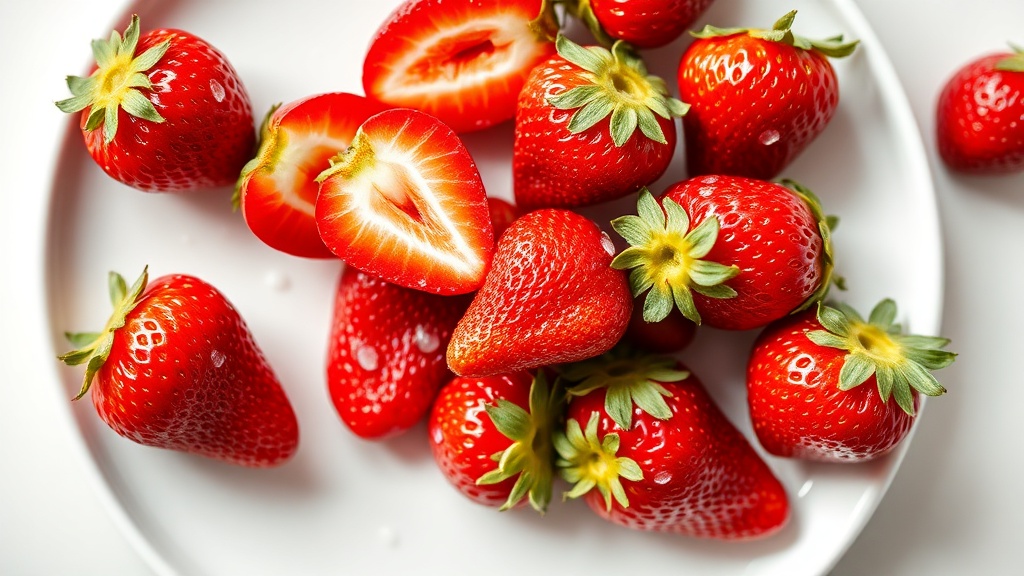
What’s in strawberries that dogs benefit from?
For a fruit this small, strawberries have a lot going on:
- Vitamin C — cup for cup, more than an orange. Dogs produce their own vitamin C, but extra helps with immune function, especially in older dogs
- Antioxidants — anthocyanins and ellagic acid that fight cell damage and may reduce inflammation
- Fibre — helps with digestion and can firm up loose stools
- Manganese — for bone health and blood sugar regulation
- Folic acid — supports cell growth. Particularly useful for pregnant dogs
- Malic acid — a natural enzyme that can actually help clean surface stains off your dog’s teeth. Not a replacement for dental care, but it’s a real thing
At 49 calories per cup, they’re one of the lowest-calorie fruit options out there. If your dog is on a weight management plan and you still want to give them treats, strawberries are hard to beat.

How many strawberries can a dog eat?
You can be a bit more generous with strawberries than with most fruits, since the sugar is lower. The 10% treat rule still applies though.
| Dog size | Weight | How many | How often |
|---|---|---|---|
| Small (Chihuahua, Pomeranian) | Under 10kg | 1–2 strawberries | 3–4 times a week |
| Medium (Beagle, Cocker Spaniel) | 10–25kg | 3–4 strawberries | Daily is fine |
| Large (Labrador, Golden Retriever) | 25–40kg | 5–6 strawberries | Daily is fine |
| Extra large (Great Dane, Mastiff) | Over 40kg | 6–8 strawberries | Daily is fine |
For small dogs, cut them in halves or quarters so they don’t choke. Bigger dogs can usually handle whole ones, but cutting them up still makes them easier to digest.
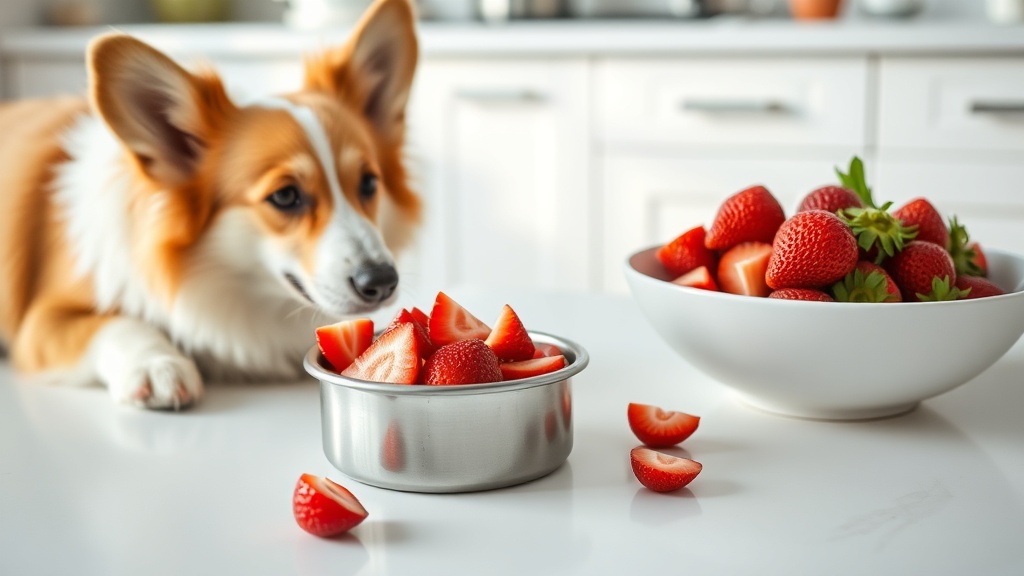
What about the leaves and stems?
Not toxic, but not particularly digestible either. Most dogs won’t bother chewing them anyway. Just twist off the green top before serving — takes two seconds and avoids any minor stomach issues.
Are the seeds safe?
Yes. Unlike watermelon seeds or mango pits, strawberry seeds are tiny and soft. They pass right through without causing any problems. Nothing to worry about here.
Ways to serve strawberries
- Fresh and sliced — take the stem off, cut in half, done. Keeps all the nutrients intact.
- Frozen whole — freeze them for a crunchy cold treat on hot days. Dogs seem to really enjoy the texture.
- Mashed into food — squash a couple and mix into their regular meal for some extra flavour.
- Dipped in yoghurt — dip halves in plain unsweetened yoghurt and freeze on a tray. The probiotics are a nice addition.
- Blended smoothie — blend with watermelon and blueberries. Freeze in ice cube trays or stuff a Kong.
What to avoid: strawberry jam, strawberry ice cream, chocolate-covered strawberries, or anything strawberry-flavoured. Added sugars, dairy, chocolate, and artificial sweeteners (especially xylitol) are all bad for dogs.
Organic or regular — does it matter for dogs?
Strawberries sit at the top of the pesticide residue lists pretty consistently. The USDA found detectable pesticide residue on over 90% of conventionally grown strawberries, even after washing. For humans eating them daily, that might matter. For a dog eating two or three a week? The risk is genuinely low.
That said, if you’re already buying organic strawberries for yourself, sharing those with your dog makes sense. If you’re buying conventional ones, a good wash under running water for 30 seconds knocks off most surface residue. Don’t bother with those fruit wash sprays — running water does just as well in every study that’s tested it.
One thing that actually matters more than organic certification: freshness. Mouldy or fermenting strawberries can cause real stomach problems for dogs. If a strawberry is soft in a bad way, smells off, or has visible mould on it, bin it rather than sharing it.
When to skip strawberries
- Diabetic dogs — lower sugar than most fruits, but still enough to affect blood glucose
- Allergies — rare in dogs, but possible. Watch for itching, hives, face swelling, or stomach problems. Try one strawberry first and wait a day
- Sensitive stomachs — the fibre and acidity can bother dogs with gut issues. Start with half a strawberry
- Pesticide concerns — strawberries regularly top the “Dirty Dozen” list for pesticide residue. Wash them well, or go organic if you can
Do strawberries actually whiten dogs’ teeth?
Sort of. Malic acid in strawberries is the same enzyme used in some human whitening products. When your dog chews a strawberry, it briefly contacts the tooth surface and can break down minor stains.
Is it going to replace brushing their teeth? No. But your dog is getting vitamins and a mild scrub at the same time, which isn’t bad for a snack.
How strawberries compare
| Fruit | Calories/cup | Sugar/cup | Best for | Prep needed |
|---|---|---|---|---|
| Strawberries | 49 | 7g | Vitamin C, low cal | Just remove stem |
| Watermelon | 46 | 9g | Hydration | Remove seeds and rind |
| Blueberries | 85 | 15g | Antioxidants | None |
| Banana | 105 | 14g | Potassium | Peel |
| Mango | 99 | 23g | Vitamins A and C | Peel + remove pit |
Low calories, low sugar, high vitamin C, almost no prep. Strawberries are the easiest win on this list.
Can puppies eat strawberries?
Yes — once they’re on solid food (6–8 weeks). Cut into small pieces because even a whole strawberry can be too much for a small puppy to handle. Start with one piece, wait a day, and go from there.
Frozen pieces work well for teething puppies. The cold helps with sore gums, and puppies tend to prefer them over plastic teething toys.
Are strawberries worth it?
Of all the fruits on this list, strawberries are probably the most practical. Low sugar, low calories, lots of vitamin C, almost zero prep, and no dangerous parts to remove. They’re cheap, available everywhere, and most dogs like them. If you’re going to give your dog fruit, strawberries are the easiest choice to feel good about.
Reviewed for accuracy by our veterinary nutrition team. Last updated March 2026.
Keeping them fresh
A punnet of strawberries in the fridge lasts about five days before they start going soft. If you’re buying specifically to share with your dog over the week, that timing works out well — grab a punnet on Monday and you’ll use it up before anything spoils.
For longer storage, wash them, pat them dry, remove the stems, and freeze flat on a baking tray. Once solid, transfer to a freezer bag. They’ll keep for months like this, and you’ve always got dog-ready portions on hand without any prep in the moment.
Frequently asked questions
Can dogs eat strawberries every day?
Medium and large dogs can handle a few strawberries daily without issues. Smaller dogs are better off with 2-3 times a week to keep sugar intake in check.
Are frozen strawberries safe for dogs?
Completely fine, and dogs tend to love them in hot weather. Just make sure they’re plain — no sugar or syrup added.
Can strawberries cause diarrhoea in dogs?
If they eat too many, yes. The fibre and natural sugars can loosen things up. Stick to the portion guide for your dog’s size and you should be fine.
Do strawberries help with bad breath in dogs?
Marginally. The malic acid does some light work on surface bacteria, and the vitamin C supports gum health. But if your dog has genuinely bad breath, strawberries won’t fix it — that’s usually a dental health issue that needs a vet checkup, not a fruit snack.
Can dogs eat strawberry jam or preserves?
No. Jam has way too much added sugar (often more sugar than fruit by weight), and some brands include artificial sweeteners or pectin additives. Stick to fresh or frozen whole berries — your dog doesn’t need the sugar hit.
Related reading