

Kiwi contains an enzyme called actinidain — a protease that breaks down proteins. In some people, it causes an itchy or tingling sensation in the mouth after eating kiwi. The same thing can happen in dogs, and it’s the reason a small number of dogs have a mild reaction to kiwi even though the fruit itself isn’t toxic. Worth knowing before you offer a slice.
For most dogs, kiwi is a perfectly reasonable treat. It’s high in vitamin C, has a decent fibre content, and most dogs eat it without any issue. The actinidain sensitivity is uncommon but real, which makes kiwi slightly more “try a small amount first” than, say, a blueberry.
What’s in a kiwi
Per 100g, green kiwi contains about 61 calories, 3g of fibre, 9g of sugar, 92mg of vitamin C (one of the highest of any common fruit), 40mcg of vitamin K, and useful amounts of potassium and folate. The vitamin C content is particularly striking — a single medium kiwi has more vitamin C than an orange.
Dogs synthesise their own vitamin C and don’t require it from food, so that specific benefit doesn’t transfer the way it does for humans. But the fibre, potassium, and folate are genuinely useful additions, even if they’re not filling a gap in a dog already on complete commercial food.
Green kiwi vs golden kiwi
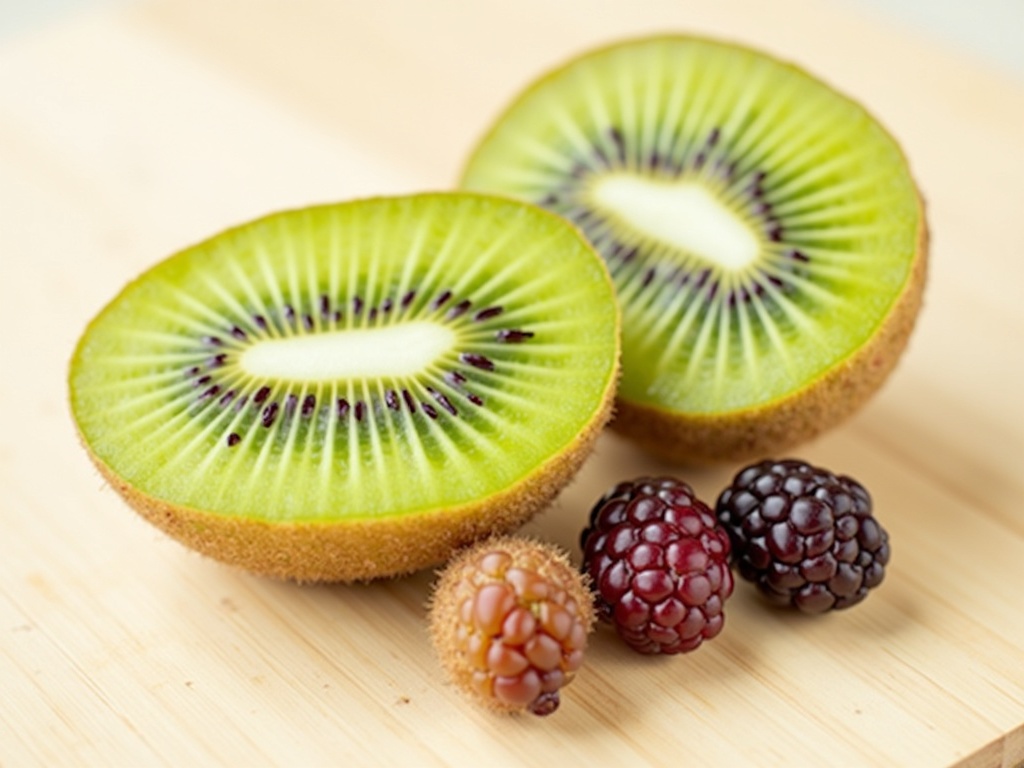
Two varieties show up in supermarkets: the standard green kiwi (Actinidia deliciosa) with its fuzzy brown skin and tart green flesh, and golden kiwi (Actinidia chinensis) with smoother yellow skin and sweeter yellow flesh.
Both are safe for dogs. The practical difference:
| Green kiwi | Golden kiwi | |
|---|---|---|
| Calories (per 100g) | 61 kcal | ~63 kcal |
| Sugar | 9g | ~12g |
| Vitamin C | 92mg | ~161mg |
| Actinidain content | Higher | Lower |
| Taste | Tart | Sweeter |
Golden kiwi has less actinidain — so if you have a dog with a sensitive stomach, the golden variety is a slightly lower-risk starting point. The higher sugar content means smaller portions are appropriate, particularly for dogs that are weight-managed or diabetic.
Kiwi berries — worth mentioning
Kiwi berries are small grape-sized fruits from the same genus — Actinidia arguta. They taste like a sweeter, milder version of kiwi and have edible skin, no fuzzy exterior, and smaller seeds. For dogs, they’re actually more convenient than standard kiwi: no peeling needed, no cutting required for medium and large dogs, and the portion size is naturally appropriate.
They’re not always easy to find, but if you spot them at a farmers market or specialty grocer, they work well as a dog treat. Same actinidain caveat applies — try one first and watch for any mouth-pawing or reluctance to swallow.
Skin and seeds
Kiwi skin is not toxic to dogs. It’s edible but tough, difficult to digest, and the fuzzy texture puts off most dogs. If your dog eats a small piece of skin incidentally, it’s not a problem. Deliberately feeding skin is unnecessary and can cause mild GI discomfort. Peel it.
The small black seeds are also non-toxic and will pass through without issue. They contain actinidain as well, in concentrated form, but the amounts in a few seeds are not a meaningful concern. No need to deseed — just peel and slice.
How much kiwi can a dog have
The sugar content (9g per 100g for green, higher for golden) means portion control matters more than with lower-sugar fruits like blueberries or raspberries. A few slices as a treat a few times a week is appropriate.
| Dog size | Safe amount (peeled, sliced) |
|---|---|
| Small (under 10kg) | 1–2 small slices |
| Medium (10–25kg) | 2–3 slices |
| Large (25kg+) | 3–4 slices or up to half a kiwi |
First time: give one small slice and wait 30 minutes. Watch for pawing at the mouth, excessive drooling, or reluctance to eat — these can indicate actinidain sensitivity. If there’s no reaction, kiwi is fine for your dog.
Frozen kiwi as a summer treat
Kiwi freezes well and most dogs enjoy the cold, slightly icy texture on a hot day. Peel, slice into appropriate-sized pieces, freeze on a tray, then store in a container. The actinidain is partially deactivated by freezing, which is another reason frozen kiwi may be easier on a sensitive stomach than fresh.
Kiwi sorbet — blended kiwi frozen in an ice cube tray — works too, provided nothing is added. No sugar, no sweeteners. Just kiwi. The green colour is visually interesting if you have a dog that’s motivated by novelty in their treats.
Signs of actinidain sensitivity
It’s uncommon but worth knowing. If your dog has an actinidain sensitivity, you might see: pawing at the mouth, drooling more than usual, reluctance to swallow, or mild GI upset within an hour of eating kiwi. These symptoms are typically mild and resolve quickly. If they persist or seem severe, call your vet.
Dogs with known food sensitivities or allergies to other proteases (papaya, pineapple, figs) may be more likely to react to kiwi as well, since actinidain belongs to the same enzyme family.
Kiwi and dogs with kidney issues
Kiwi has a moderate oxalate content — lower than spinach or beets, but not negligible. Dogs with a history of calcium oxalate bladder stones should check with a vet before making kiwi a regular treat. For healthy dogs, the oxalate content in treat-sized amounts is not a concern.
The potassium content (312mg per 100g) is high relative to most fruits. For dogs with kidney disease being managed on a low-potassium diet, this is relevant — ask your vet. For healthy dogs, potassium at these levels is fine and beneficial.
FAQs
Can dogs eat kiwi skin?
Technically yes — the skin is not toxic. In practice, peel it. The fuzzy texture is unpleasant for most dogs and the skin is harder to digest than the flesh. Kiwi berries are the exception: their skin is smooth and thin, and there’s no need to peel them.
Can dogs eat golden kiwi?
Yes, and golden kiwi is actually slightly better for dogs with sensitive stomachs because it contains less actinidain than green kiwi. The sugar content is a bit higher, so adjust portions slightly downward compared to green kiwi. Both are safe; golden is sweeter and milder.
My dog ate a whole kiwi, skin and all. Should I be worried?
Probably not seriously. The skin may cause some GI discomfort from the fibre load and tough texture. Watch for signs of discomfort over the next 12–24 hours. If your dog seems distressed or you’re seeing persistent vomiting, call your vet. A whole kiwi swallowed with the skin is mostly a digestive inconvenience, not a toxicity concern.
Can dogs eat kiwi every day?
Small amounts daily are fine for most dogs without sensitivities. Given the sugar content, treat it like most fruits — occasional rather than a staple. A slice or two a few times a week fits better into a balanced treat rotation than daily feeding.
Is kiwi good for a dog’s immune system?
The vitamin C content is often cited for immune benefits, but dogs produce their own vitamin C and don’t require it from food. The more relevant compounds are the antioxidants — vitamin E, polyphenols, and carotenoids — which kiwi has in reasonable amounts. Whether these translate to measurable immune benefits in treat-sized quantities for dogs is not well-studied. Kiwi is a decent fruit treat; calling it an immune booster overstates what the evidence supports.
By Sarah Mitchell · Reviewed by Dr. Marcus Webb, DVM
For other fruit options with similar sugar levels, see our guides on can dogs eat mango and can dogs eat pineapple. For lower-sugar alternatives, blueberries and raspberries are worth considering.