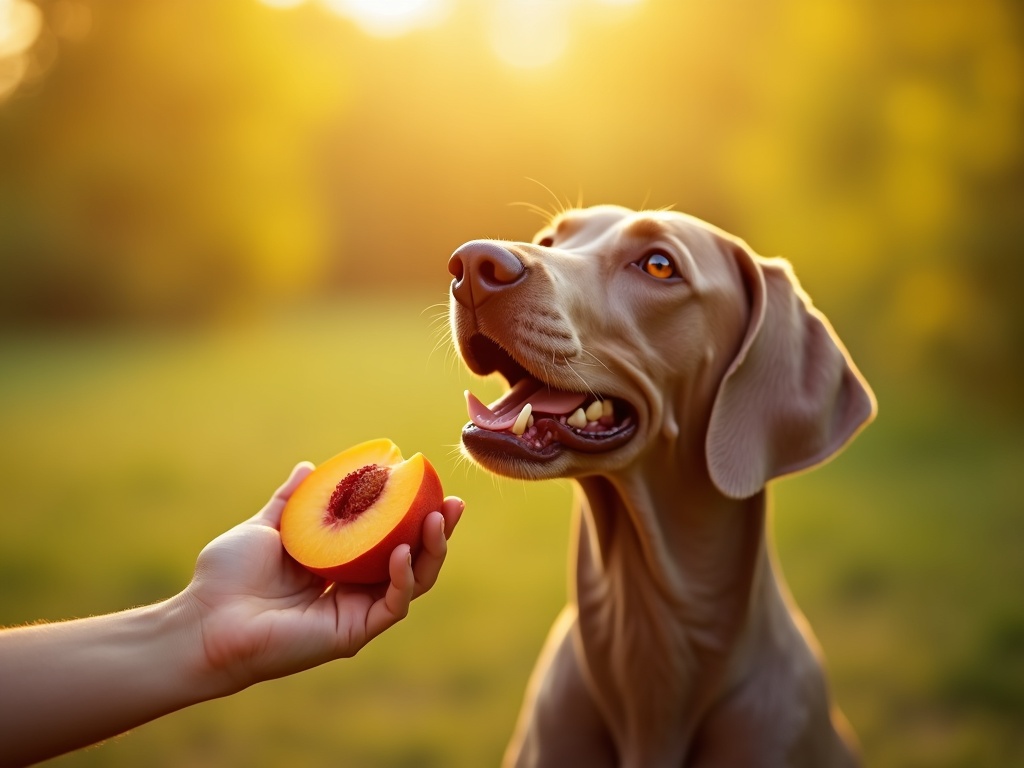

The pit is the problem. The flesh is fine. That one sentence covers about 90% of what you need to know about dogs and peaches — but the reasoning behind it is more interesting than most articles let on, and it also answers the nectarine question while we’re here.
Dogs can eat peaches and nectarines. Both fruits, same answer: yes to the flesh, remove the pit, leaves, and stem before giving any to your dog.
Why the pit is actually dangerous (the chemistry)
Peach pits contain amygdalin, a naturally occurring compound that the body converts to hydrogen cyanide during digestion. The same compound is found in apple seeds, cherry pits, apricot kernels, and the pits of most stone fruits.
Here’s what most guides get wrong: they say “the pit contains cyanide” without explaining the dose. The flesh of a ripe peach contains negligible amygdalin — far too little to cause any issue. The pit contains significantly more, and chewing or cracking it releases far more than swallowing it whole. A dog that swallows a whole pit without cracking it faces mainly a physical risk (choking, intestinal obstruction) rather than a toxicity risk. A dog that chews through a pit faces both.
The amygdalin content varies by variety. According to the ASPCA, peach pits are toxic to dogs — the stems and leaves contain the same compounds. If your dog has eaten a cracked or chewed pit, call poison control.
For context: a medium dog would need to consume several cracked pits for potentially fatal cyanide toxicity. One whole swallowed pit is primarily a blockage concern. One piece of peach flesh is not a concern at all.
Peaches vs nectarines — what’s the difference for dogs
Genetically, nectarines and peaches are almost identical — nectarines are just a smooth-skinned variety of the same species (Prunus persica). The flesh, pit, and nutritional profile are essentially the same. Same amygdalin in the pit, same sugar content in the flesh, same safety rules.
In practice, nectarines are slightly firmer and often sweeter. Dogs that turn up their nose at peach texture sometimes take to nectarines better. The pit in a nectarine is equally dangerous. Otherwise, treat them interchangeably.
What peaches actually contain
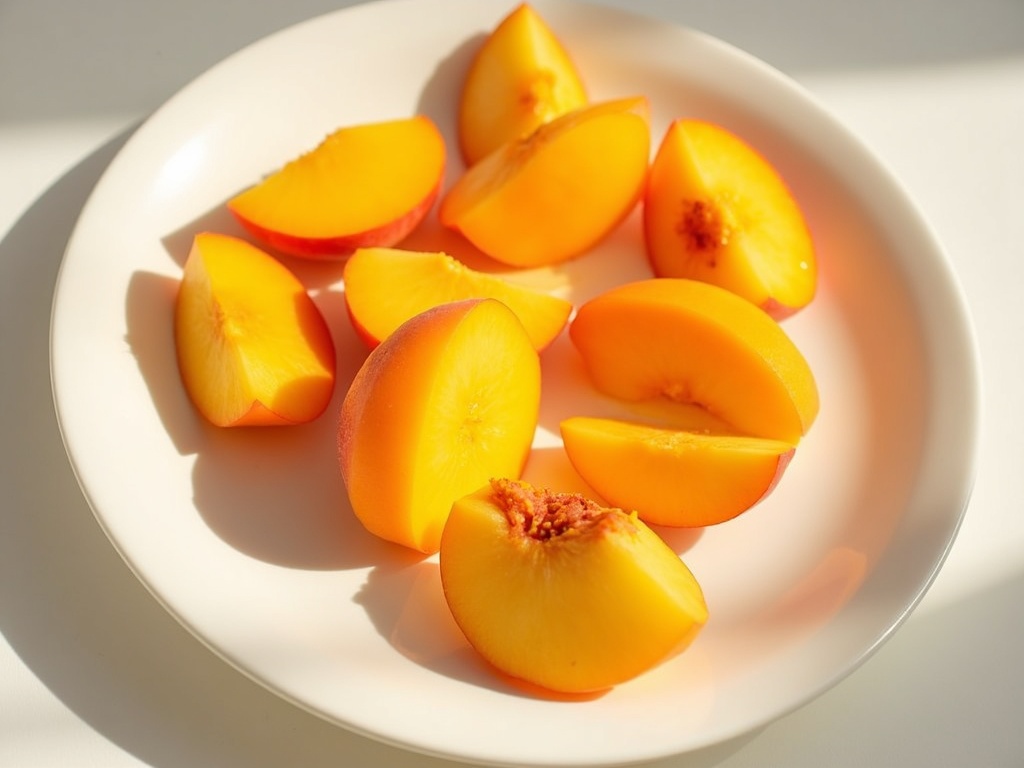
Per 100g, a fresh peach contains about 39 calories, 9.5g of sugar, 1.5g of fibre, 6.6mg of vitamin C, and modest amounts of vitamin A, potassium, and niacin. The sugar content is higher than berries but lower than mango or banana — it sits in the middle range of fruit treats.
For dogs, the nutritional benefit is real but modest. Vitamin A supports skin and coat health; potassium supports muscle function. Nothing in peach flesh that a dog on complete commercial food is missing, but as an occasional treat the nutrient profile is better than most biscuits.
Canned peaches — the tinned question
Canned peaches are technically non-toxic, but the syrup they’re packed in is a problem. Most tinned peaches come in heavy or light syrup — concentrated sugar solutions that aren’t appropriate for dogs. Even “in juice” versions have added sugars.
If you have tinned peaches and want to give your dog a piece, rinse the slice thoroughly under water first and keep it to a very small amount. Not ideal. Fresh or frozen peaches are much better options.
Peach leaves and stems — keep away
If you have a peach tree in the garden, this matters more than the fruit itself. Peach leaves and stems contain amygdalin in higher concentrations than even the pit. A dog that chews on fallen branches or grazes on leaves from a peach tree is at genuine risk — more so than from eating the flesh.
Dogs usually ignore leaves, but some will chew on fallen branches out of boredom. If you have a peach tree, keep an eye on what drops. Same applies to apricot, cherry, and plum trees — all produce leaves and stems with the same compound.
Peach skin — peel or not?
Peach skin is not toxic. For most dogs it’s fine — it’s thin and digestible. The fuzzy texture can be mildly off-putting to some dogs, but it doesn’t cause problems. For dogs with sensitive stomachs, peeling removes a small amount of additional fibre that might otherwise cause mild GI irritation. For most dogs, don’t bother peeling.
How much peach is safe
The sugar content (9.5g per 100g) is the main reason to keep portions moderate, particularly for diabetic dogs or dogs on weight management programmes.
| Dog size | Safe amount (flesh only, pit removed) |
|---|---|
| Small (under 10kg) | 1–2 small slices |
| Medium (10–25kg) | 2–3 slices |
| Large (25kg+) | Up to half a peach, sliced |
A few times a week is fine. First time: one small slice, wait a few hours, check for GI response before offering more.
What to do if your dog ate a peach pit
First: stay calm. Assess what happened. Did they swallow it whole, or did they crack or chew it?
Whole pit swallowed: call your vet. The immediate risk is physical obstruction, not toxicity. Your vet may recommend monitoring or may want to see your dog depending on size. A small dog that swallows a whole pit is at higher risk of obstruction than a large dog.
Cracked or chewed pit: call your vet or the ASPCA Animal Poison Control Center at (888) 426-4435. The amygdalin released from a chewed pit is a more immediate toxicity concern. Symptoms of cyanide toxicity in dogs include panting, bright red gums, dilated pupils, and seizures — these typically appear within 15–20 minutes if a meaningful dose was consumed.
One cracked pit from a medium or large dog is unlikely to cause fatal toxicity, but it warrants a call. Don’t wait for symptoms.
Dogs that should avoid peaches
Diabetic dogs: the 9.5g sugar per 100g is meaningful for a dog on blood glucose management. A small piece occasionally is unlikely to cause a crisis, but peaches shouldn’t be a regular treat for diabetic dogs without discussing it with your vet.
Overweight dogs: at 39 calories per 100g, peaches are moderate-calorie for a fruit. A few slices here and there fit into most calorie budgets, but they add up faster than lower-calorie options like cucumber or celery.
Dogs with pancreatitis: high-sugar foods can trigger flare-ups in dogs with a history of pancreatitis. Check with your vet before offering fruit to a dog with this condition.
FAQs
Can dogs eat peach skin?
Yes. It’s not toxic and most dogs digest it without issue. The skin contains slightly more fibre than the flesh, which is fine in normal amounts. If your dog has a sensitive stomach, peeling is a simple precaution — otherwise it’s not necessary.
Can dogs eat frozen peaches?
Yes, provided the pit has been removed before freezing and no sugar or syrup has been added. Frozen peach chunks are a good summer treat — the cold temperature slows eating and the texture interests most dogs. Pit removal is non-negotiable even for frozen fruit.
Are peaches and nectarines the same for dogs?
Essentially yes. They’re the same species — nectarines are a smooth-skinned peach. Identical pit toxicity risk, very similar nutritional profile, same portion guidance. If your dog prefers one texture over the other, go with that.
Can dogs eat dried peaches?
Not recommended. Dried peaches have concentrated sugar — roughly four times the sugar per gram compared to fresh. They may also contain sulphur dioxide as a preservative, which can cause GI irritation in some dogs. Stick to fresh or frozen.
By Sarah Mitchell · Reviewed by Dr. Marcus Webb, DVM
For more stone fruit guidance, see our article on can dogs eat avocado. For other summer fruit treats, can dogs eat watermelon and can dogs eat mango cover the basics.