

Raspberries contain natural xylitol. That sentence has sent a lot of dog owners into a panic — and understandably so, given how toxic xylitol is to dogs. But the amount of xylitol in a raspberry is so small that you’d need to feed a medium-sized dog somewhere around 32 cups of raspberries to approach a dangerous dose. That’s not moderation. That’s a raspberry farm.
So yes, dogs can eat raspberries. The xylitol concern is real in principle, irrelevant in practice for normal treat amounts. Here’s the full picture.
The xylitol question — actually answered
Xylitol is a natural sugar alcohol found in various plants. In dogs, even small amounts from artificial sources (chewing gum, some peanut butters, certain supplements) can cause life-threatening hypoglycemia and liver failure. It’s one of the more serious food toxins for dogs.
Raspberries do contain xylitol — roughly 0.05g per 100g of fruit, according to USDA nutritional data. For context: a single raspberry weighs about 5g, which means it contains approximately 0.0025g of xylitol. The toxic threshold for xylitol in dogs starts at around 0.1g per kilogram of body weight. A 10kg dog would need to consume 400g of pure xylitol before reaching that threshold — or roughly 800kg of raspberries.
In short: the naturally occurring xylitol in raspberries is not a practical concern at treat quantities. The AKC confirms raspberries are safe for dogs while acknowledging the xylitol content exists. The operative word is moderation — and the reason for that is sugar load and fibre, not xylitol.
What’s actually in a raspberry
Raspberries are low in calories and reasonably nutritious. A 100g serving has about 52 calories, 6.5g of fibre, 4.4g of sugar, and solid amounts of vitamin C (26mg), vitamin K (8mcg), and manganese. The fibre content is notably high for a fruit — higher than most berries.
The fibre is actually the main reason raspberries make a decent dog treat. It supports digestive health and contributes to satiety. The antioxidant profile — anthocyanins, ellagic acid, quercetin — is also worth noting, though the research on these compounds in dogs specifically is limited.
What they’re not: a significant source of anything your dog’s regular food doesn’t already cover. Think of them as a low-guilt treat rather than a nutritional intervention.
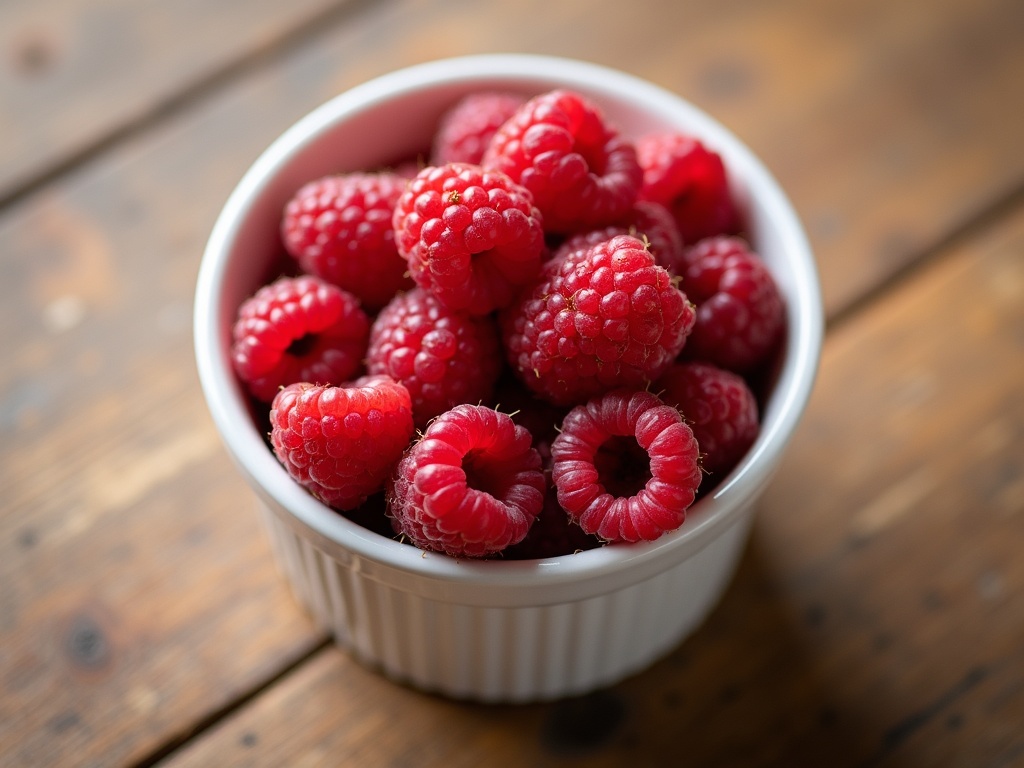
Fresh vs frozen raspberries
Both are fine. Fresh raspberries are the obvious choice in season. Frozen raspberries — thawed or straight from the freezer — work just as well nutritionally, and some dogs seem to prefer the texture of a slightly frozen berry. The freezing process doesn’t affect the xylitol content or any other relevant compound.
What to avoid: raspberry-flavoured anything. Raspberry jam, raspberry yogurt, raspberry sorbet. These products typically contain added sugar, artificial sweeteners (sometimes including synthetic xylitol), and ingredients that are actually problematic. Stick to plain fruit.
How many raspberries can a dog eat
The sugar in raspberries is relatively low for a fruit, but it still adds up if you’re giving a lot. Fibre in large amounts also causes loose stools. The practical limits:
| Dog size | Sensible treat amount |
|---|---|
| Small (under 10kg) | 2–3 raspberries |
| Medium (10–25kg) | 5–6 raspberries |
| Large (25kg+) | 8–10 raspberries |
A few times a week is fine. Daily is probably more than needed, and the cumulative fibre can cause digestive issues in sensitive dogs. First time: give one or two, see how they handle it before offering more.
Dogs with specific conditions
Diabetic dogs should have raspberries limited or avoided — not because of xylitol, but because of the natural sugar content. Even 4.4g per 100g adds up if your dog is closely managed for blood glucose.
Dogs prone to weight gain should also keep raspberry treats occasional rather than frequent. 52 calories per 100g sounds low, but a handful of berries plus other treats can nudge daily calorie totals higher than intended.
For dogs on no particular restrictions, raspberries are one of the more straightforward fruit treats you can offer. Lower sugar than bananas, lower risk profile than strawberries (which some dogs are mildly sensitive to), and more fibre than most.
Frozen raspberries as a summer treat
Worth a specific mention: frozen raspberries straight from the freezer are one of the better hot-weather dog treats around. They’re cold, they take a moment to eat, and most dogs find them genuinely interesting. For dogs that inhale their food without tasting it, a frozen raspberry slows things down in a way a dry biscuit doesn’t.
You can also blend raspberries with plain yogurt (no sweeteners, check the label) and freeze them in ice cube trays. A few of these as an occasional summer treat is well within reasonable limits for most dogs. Just account for the yogurt calories alongside the raspberries.
What about raspberry leaves or plants?
Raspberry plants — the leaves, stems, and canes — are not toxic to dogs. If your dog has nibbled on a raspberry bush during a garden wander, it’s not an emergency. The berries themselves are the edible part, but contact with the rest of the plant isn’t harmful. The canes do have small thorns that could cause minor mouth irritation, which is more of a comfort issue than a toxicity one.
Raspberry leaf tea — sometimes used in herbal medicine — is a different matter. If you’re considering any herbal supplement for your dog, that’s a conversation for your vet rather than a garden experiment.
Can dogs eat other berries?
Most common edible berries are safe in moderation — blueberries (which we’ve covered in detail here), strawberries, blackberries. The ones to avoid are berries that aren’t typically sold as food: holly berries, mistletoe berries, juniper berries, and anything you can’t positively identify from a garden or wild setting. When in doubt, skip it.
Blackberries are worth a brief note — they have a very similar nutritional profile to raspberries, same xylitol situation (trace amounts, not a practical concern), and similar fibre content. If your dog likes raspberries, blackberries are an easy rotation. Both freeze well and both work in the yogurt-ice-cube format mentioned above.
Grapes and raisins are the berry-adjacent food to absolutely avoid — they’re in a completely different category from the soft berries discussed here. We cover the specifics of grape toxicity in dogs separately, but the short version is: any amount, any form, treat as an emergency.
FAQs
Are raspberries safe for dogs with sensitive stomachs?
Start with just one or two. Raspberries are high in fibre, which is usually beneficial but can cause loose stools in dogs that aren’t used to much fruit in their diet. If your dog handles them without issue after a small test amount, you can increase gradually. If there’s any GI reaction, stick to lower-fibre treats.
Can dogs eat raspberry jam or raspberry yogurt?
No. Jam has significant added sugar and often preservatives. Some yogurts contain artificial sweeteners — check labels carefully, as synthetic xylitol in yogurt IS a genuine concern unlike the trace amounts in raw fruit. Plain fruit only.
My dog ate a whole punnet of raspberries. Should I be worried?
Probably not seriously, but expect some digestive upset — loose stools or gas from the fibre load. Monitor for 24 hours. If they ate the plastic punnet container too, that’s a different concern and worth a call to your vet. The berries themselves in that quantity are unlikely to cause anything beyond temporary GI discomfort.
By Sarah Mitchell · Reviewed by Dr. Marcus Webb, DVM
For more on fruit treats, see our guides on can dogs eat blueberries and can dogs eat strawberries. For vegetables, can dogs eat broccoli is worth a read.