

Gram for gram, blueberries pack more antioxidants than almost any other fruit you can buy at the supermarket. They’re also one of the few human foods that vets recommend as training treats. Small enough to toss, low enough in sugar that you can use a handful during a session without guilt, and most dogs will do just about anything for one.
Can dogs eat blueberries?
Yes, and they’re good for them too. Blueberries sit near the top of the “safe fruits for dogs” list because there’s nothing to remove. No pit, no toxic skin, no seeds worth worrying about. You can hand them over straight from the punnet.
The Australian Blueberry Growers Association reports that domestic blueberry consumption has tripled in the last decade, and a fair chunk of that growth seems to be coming from pet owners using them as treats. They’re convenient, cheap in season, and dogs tend to love them.
The antioxidant thing: real or hype?
You hear “antioxidants” thrown around a lot with blueberries, to the point where it sounds like marketing. But the science is solid for dogs.
Blueberries are high in anthocyanins, the compounds that make them blue. In dogs, these have been linked to reduced oxidative stress, which plays a role in ageing, cognitive decline, and some cancers. A 2006 study from the University of Alaska Fairbanks found that sled dogs fed blueberry supplements had significantly higher blood antioxidant levels after exercise compared to the control group.
What else is in there? Vitamin C comes in at about 14mg per 100g — dogs make their own, but a little extra doesn’t hurt, particularly for older dogs or those recovering from illness. There’s vitamin K for blood clotting and bone metabolism, about 2.4g of fibre per 100g to help with digestion without being overwhelming, and manganese as a trace mineral for bone health.
At 57 calories per 100g, blueberries are lower in sugar than bananas (89 cal) and mango (60 cal), and comparable to strawberries (32 cal) and watermelon (30 cal).
Why they work as training treats
Professional dog trainers have been using blueberries for years, and the reasons are practical rather than nutritional. They’re tiny, so you can give 20 during a training session without overfeeding. They don’t crumble or make a mess like biscuit treats. They’re soft enough that dogs eat them quickly and refocus on you. The smell is mild, so they don’t distract other dogs in a group class. And frozen ones in summer work even better because the cold gives an extra sensory reward.
If you’ve been spending money on commercial training treats, try a punnet of blueberries next time. Your dog probably won’t know the difference, and your wallet definitely will.

One thing to watch: choking
Blueberries are round, firm, and about the size of a marble. For medium and large dogs, that’s not a concern. They’ll chew or just swallow them whole without trouble. For toy breeds and very small dogs (under 5kg), a whole blueberry could be a choking hazard.
The fix is simple: squash them slightly with your thumb before giving them to a small dog. You don’t need to cut them in half or mash them, just enough of a squeeze to break the skin so they’re not perfectly round.
Puppies under 12 weeks should get them squashed regardless of breed size. Their swallowing coordination isn’t fully developed yet.
How many blueberries can a dog have?
Because they’re so small and low in sugar, you can be more relaxed with blueberry portions than with most fruits. A rough guide: small dogs can have 5-8 blueberries a day, medium dogs 10-15, and large dogs up to 20. That’s a daily limit, not a target. Some days none is fine too.
The 10% treat rule still applies in theory, but you’d need to feed a pretty absurd amount of blueberries to actually hit 10% of a dog’s daily calories. A Labrador eating 2,000 calories a day would need over 350 blueberries to reach that threshold. Nobody’s doing that.
Where you might run into trouble is the fibre. Twenty blueberries won’t cause problems, but if your dog gets into a full punnet (it happens), expect loose stools for a day or so. Not dangerous, just messy.
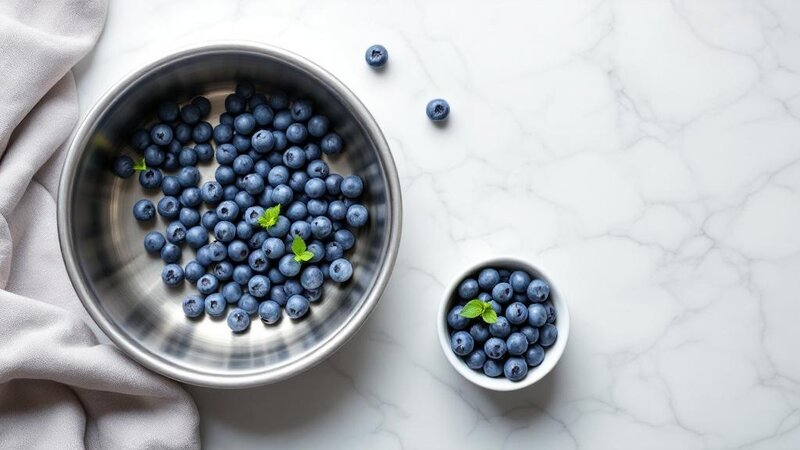
Fresh, frozen, or dried?
Fresh is the default. Wash them, hand them over. Nothing to peel, pit, or prepare. Peak season in Australia runs from around September to March, which is when they’re cheapest and tastiest.
Frozen might be even better for dogs. Freezing doesn’t destroy the anthocyanins — some research suggests it actually makes them more bioavailable. Frozen blueberries have a satisfying crunch that most dogs enjoy, they last for months in the freezer, and they’re cheaper than fresh outside of season. Pop a few into a Kong with some plain yoghurt and freeze the whole thing. Your dog will be occupied for a good twenty minutes.
Dried are fine in moderation, but check the label. A lot of dried blueberries have added sugar, oil coating, or preservatives. If the ingredient list says anything other than “blueberries,” skip it. Drying concentrates the sugar by removing water, so a small handful of dried berries has considerably more sugar than the same amount fresh. Give fewer.
Blueberry muffins, pancakes, jam? No. Anything made with blueberries for human consumption almost certainly has added sugar, flour, butter, or other ingredients your dog doesn’t need. Stick to the actual berry.
Older dogs and blueberries
This is where blueberries get interesting. Cognitive decline in older dogs — canine cognitive dysfunction, the dog equivalent of dementia — is linked to oxidative stress in the brain. The anthocyanins in blueberries cross the blood-brain barrier and may help protect neural tissue.
A study published in the British Journal of Nutrition found that senior dogs fed an antioxidant-rich diet (including blueberries) showed measurable improvements in learning tasks compared to dogs on a standard diet. It’s not a cure, and the effect is modest, but for a treat that costs next to nothing and dogs enjoy eating, there’s not much downside.
If your older dog has started seeming confused at night, forgetting commands they’ve known for years, or staring at walls, talk to your vet. Blueberries won’t reverse cognitive decline on their own, but they’re a reasonable addition alongside whatever your vet recommends.
When blueberries aren’t right
Dogs on blood thinners should steer clear. The vitamin K in blueberries affects clotting, and if your dog takes warfarin or similar medication, adding blueberries regularly could interfere. Check with your vet first.
Dogs prone to bladder stones might also want to skip them. Blueberries contain oxalates, which can contribute to stone formation in susceptible dogs. Dalmatians and a few other breeds tend to be more at risk here.
And if your dog doesn’t handle other fruits well — loose stools, stomach grumbling, general unhappiness — blueberries probably won’t be an exception. Some dogs just have sensitive guts when it comes to fructose.
Frequently asked questions
Can dogs eat blueberries every day?
Yes, a small handful daily is fine for most dogs. They’re low enough in sugar and calories that daily consumption isn’t a problem. Just don’t go overboard with quantity.
Are wild blueberries better than cultivated ones for dogs?
Wild blueberries are smaller and tend to have slightly higher antioxidant concentrations per gram. But the difference is marginal enough that it doesn’t matter much. Whatever’s available and affordable is fine.
Can blueberries turn my dog’s poo dark?
Yes, and it’s harmless. The anthocyanins (the blue-purple pigment) pass through the digestive system and can darken stool colour. It looks alarming the first time but it’s completely normal.
My dog swallowed blueberries whole without chewing. Is that okay?
For medium and large dogs, yes. Blueberries are small and soft enough to pass through without problems. For toy breeds, squash them first to reduce choking risk, but if a few went down whole and your dog seems fine, don’t worry about it.
Can puppies eat blueberries?
Once they’re on solid food (around 6-8 weeks), a couple of squashed blueberries is fine. Squash them to reduce choking risk and to make them easier to digest. Start with two or three and see how your puppy handles them before offering more.
Are blueberry supplements for dogs worth buying?
Probably not, when you can just give them the actual fruit. Supplements cost more, often contain fillers, and you lose the fibre benefit. A punnet of fresh or frozen blueberries does the same job for a fraction of the price.
Related reading
Reviewed for accuracy by our veterinary nutrition team. Last updated March 2026.