

On a hot day, few things cool a dog down like a chunk of watermelon. The red flesh is safe, barely has any calories, and is 92% water. Just make sure you take out the seeds and rind before sharing — both can cause real digestive problems.
Is watermelon safe for dogs?
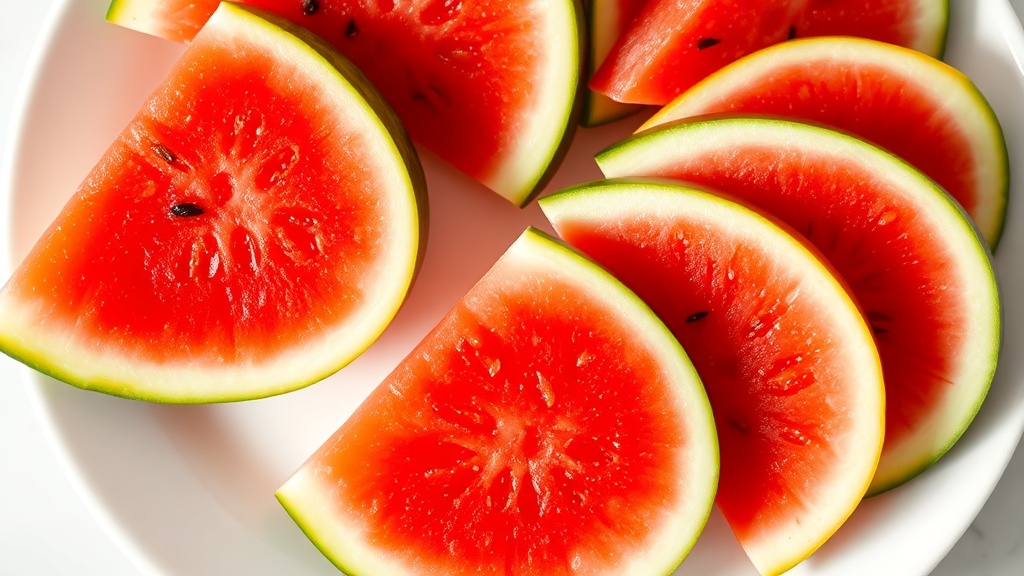
The red part of a watermelon is completely safe for dogs. It’s non-toxic, low in calories, and about 92% water, which makes it a solid option when it’s hot out and your dog needs cooling down.
The parts you need to worry about are the seeds and the rind. Seeds can cause intestinal blockage (especially in smaller dogs), and the tough green rind is nearly impossible for a dog to digest. Always prep the watermelon before giving it to your dog.
What’s in watermelon that’s good for dogs?
There’s more to watermelon than just water and sugar:
- Lycopene — the antioxidant that makes it red. Linked to lower cancer risk and better heart health in both humans and dogs
- Vitamin A — supports eyes, skin, and immune function
- Vitamin B6 — helps with brain function and hormone regulation
- Vitamin C — another antioxidant that helps with inflammation
- Potassium — good for heart and muscle function
One cup of watermelon has about 46 calories. Most commercial dog treats sit around 30-40 calories per piece, so watermelon actually comes out ahead on both nutrition and calorie count.
How much watermelon can a dog eat?
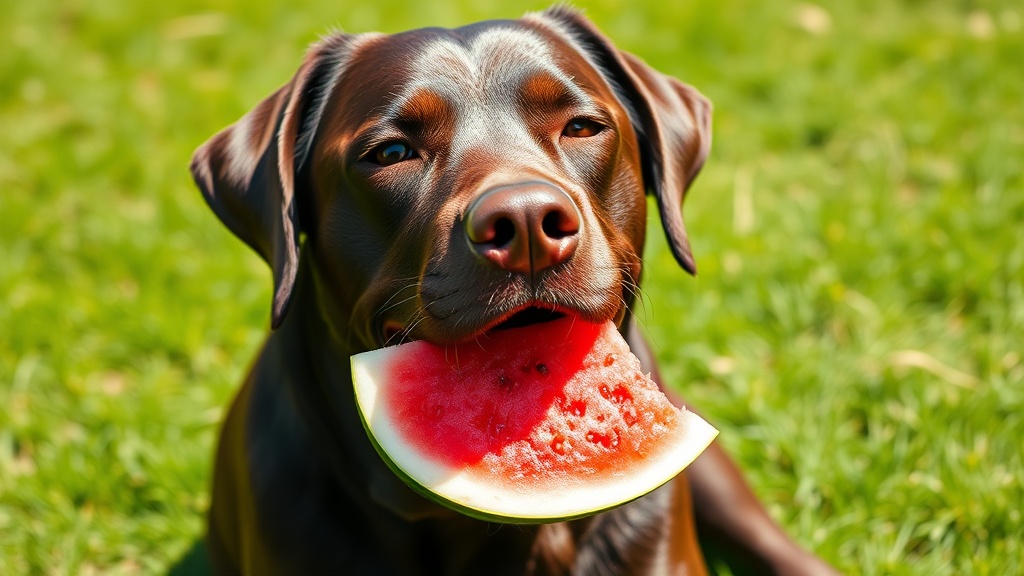
The usual 10% rule applies — treats shouldn’t go past 10% of your dog’s daily calories. Since watermelon is so low in calories, you can be a bit more generous than with something like bananas.
| Dog size | Weight | How much | How often |
|---|---|---|---|
| Small (Chihuahua, Pomeranian) | Under 10kg | 2–3 small cubes | Daily in summer |
| Medium (Beagle, Cocker Spaniel) | 10–25kg | 1/2 cup cubed | Daily in summer |
| Large (Labrador, Golden Retriever) | 25–40kg | 1 cup cubed | Daily in summer |
| Extra large (Great Dane, Mastiff) | Over 40kg | 1–2 cups cubed | Daily in summer |
Because it’s mostly water, the sugar hit is lower per volume than most fruits. Still, too much can cause loose stools from all that water and fibre.
Can dogs eat watermelon seeds?
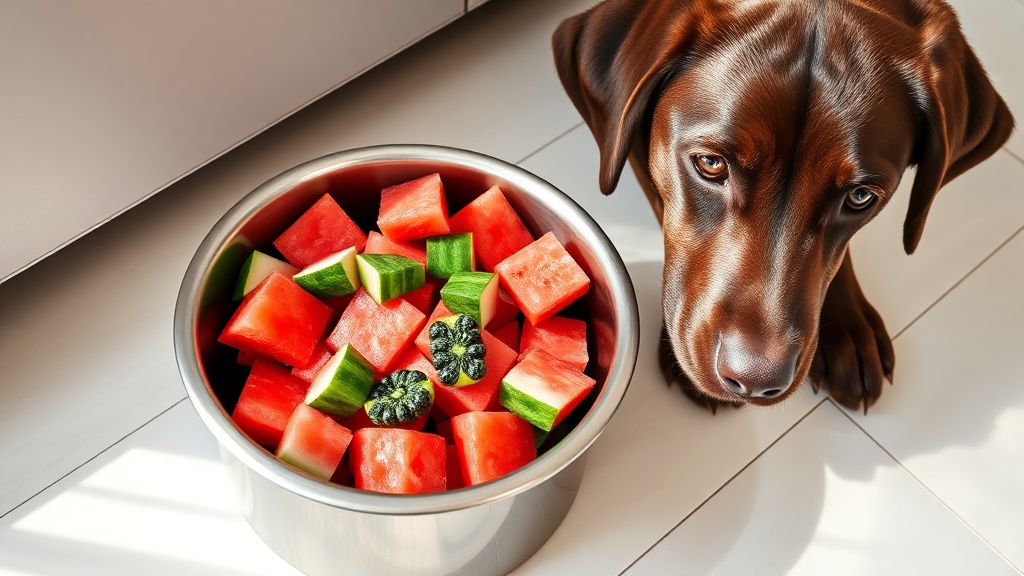
No — take them out. Seeds can cause intestinal blockage, particularly in small and medium breeds. If several seeds clump together in the digestive tract, you could end up with a vet emergency.
If a big dog accidentally swallows one or two seeds, it’s probably fine. But why risk it? Go for seedless varieties when you can. They’re not 100% seed-free, but the seeds are much smaller and fewer.
Can dogs eat watermelon rind?
No. The hard green outer part is bad news:
- It’s extremely tough to chew and digest
- Can cause gastrointestinal blockage
- Often triggers vomiting and diarrhoea
- It’s a choking hazard for dogs who eat fast
The pale greenish-white layer just under the rind won’t poison your dog, but it’s still hard to digest. Just stick to the red part.
If your dog ate a big piece of rind, call your vet. Watch for repeated vomiting, straining to go to the toilet, or obvious stomach pain.
Ways to serve watermelon to your dog
- Fresh cubes — seeds out, rind off, cut to size. The easy option.
- Frozen chunks — freeze seedless cubes for a cold summer treat. Dogs seem to love the crunch.
- Watermelon ice blocks — blend it up and pour into ice cube trays or stuff a Kong. Freeze overnight.
- Mixed with other fruit — toss some cubes in with blueberries and strawberries.
- Dehydrated — if you’ve got a food dehydrator, dried watermelon makes a chewy treat. Keep portions smaller though, because the sugar concentrates.
What to avoid: anything watermelon-flavoured that’s made for humans. Watermelon candy, juice, or anything with artificial sweeteners — xylitol in particular is toxic to dogs.
Picking a dog-friendly watermelon
Not all watermelons are equal when you’re buying one to share with your dog. Seedless varieties save you a lot of prep time — you still need to remove the rind, but at least you’re not picking out dozens of black seeds.
Go for a ripe one. Under-ripe watermelon has more of the compound cucurbitacin, which can cause stomach cramps in dogs (and humans, for that matter). A ripe watermelon will feel heavy for its size, have a yellow patch on the bottom where it sat on the ground, and sound hollow when you tap it.
If you’re buying pre-cut watermelon from the supermarket, check that it hasn’t been sitting in juice for too long — bacteria grows fast in cut melon at room temperature. Once you’ve opened it, refrigerate leftovers and use within three days.
When watermelon isn’t a good idea
- Diabetic dogs — there’s still natural sugar in there, even if it’s less than most fruits
- Sensitive stomachs — all that water and fibre can trigger diarrhoea in dogs already prone to gut issues
- Puppies under 8 weeks — wait until they’re eating solid food
- Kidney problems — the potassium content might be an issue. Check with your vet first
How watermelon stacks up against other fruits
| Fruit | Calories/cup | Water content | Sugar/cup | Best for |
|---|---|---|---|---|
| Watermelon | 46 | 92% | 9g | Hydration, low-calorie treat |
| Banana | 105 | 75% | 14g | Potassium, energy boost |
| Strawberries | 49 | 91% | 7g | Vitamin C |
| Blueberries | 85 | 84% | 15g | Antioxidants |
| Mango | 99 | 83% | 23g | Vitamins A and C |
For keeping calories down and hydration up, watermelon is hard to beat. It’s basically flavoured water with some vitamins thrown in — ideal for active dogs in warm weather.
Can puppies eat watermelon?
Yes, once they’re on solid food (around 6–8 weeks). Start with a cube or two and see how they handle it over 24 hours. Puppies are more sensitive to the laxative effect of high-water foods, so don’t overdo it.
Frozen cubes are especially good for teething puppies — the cold helps with sore gums.
Worth it?
Watermelon is one of the safest fruits you can give a dog. Take out the seeds and rind, chop it up, and you’ve got a treat that’s cheap, healthy, and your dog will probably love. On a hot day, a few frozen cubes go a long way.
Reviewed for accuracy by our veterinary nutrition team. Last updated March 2026.
What a bad reaction looks like
Watermelon is low-risk, but dogs with sensitive guts can still have trouble with it. The high water content acts as a natural laxative — great in moderation, not so great if your dog demolishes half a watermelon while you weren’t looking.
After their first taste, watch for watery stools, excessive thirst (ironic, given how hydrating watermelon is), or a suddenly gassy dog. These usually clear up on their own within a day. If you notice vomiting that lasts more than a few hours or any blood in their stool, ring your vet — that’s beyond normal food sensitivity territory.
Frequently asked questions
Can dogs eat watermelon every day?
In summer, a small amount daily is fine for most dogs. Just watch for loose stools — if that happens, cut back to a few times a week.
What happens if my dog eats watermelon seeds?
A few seeds probably won’t hurt a larger dog. Smaller breeds are more at risk for blockage. If your dog ate a lot of seeds, watch for vomiting, constipation, or unusual tiredness and call your vet if anything seems off.
Is seedless watermelon safer for dogs?
Yes. You still need to take off the rind, but you skip the whole seed removal step. Seedless varieties aren’t completely seed-free, but the seeds are tiny and much less likely to cause problems.
Can dogs eat yellow watermelon?
Yes. Yellow watermelon is just a different variety — same safety profile, same prep rules. It has slightly less lycopene than red watermelon but more beta-carotene instead. Taste-wise, some dogs seem to prefer it because it’s a touch sweeter.
Is watermelon juice safe for dogs?
Homemade watermelon juice (just blended watermelon, nothing added) is fine in small amounts. Store-bought watermelon juice almost always has added sugar, and sometimes artificial sweeteners. Stick to the real thing — blend it yourself or just give them the fruit.
Related reading