
Roughly 1 in 3 dogs will visit a vet each year because of something they ate. Not always something obviously toxic — sometimes just the wrong version of something that’s normally fine.
That number comes from veterinary poison control data, and it sits in the back of your head when your Irish Setter stares at your plate like you’re personally responsible for his dinner.
This guide is organised by food type, not alphabetically. The alphabet approach works fine for reference but tells you nothing about why certain foods behave the way they do in a dog’s body — and that context is actually useful when you’re making decisions in real time.
Quick reference — before you read further
| Food | Verdict | Notes |
|---|---|---|
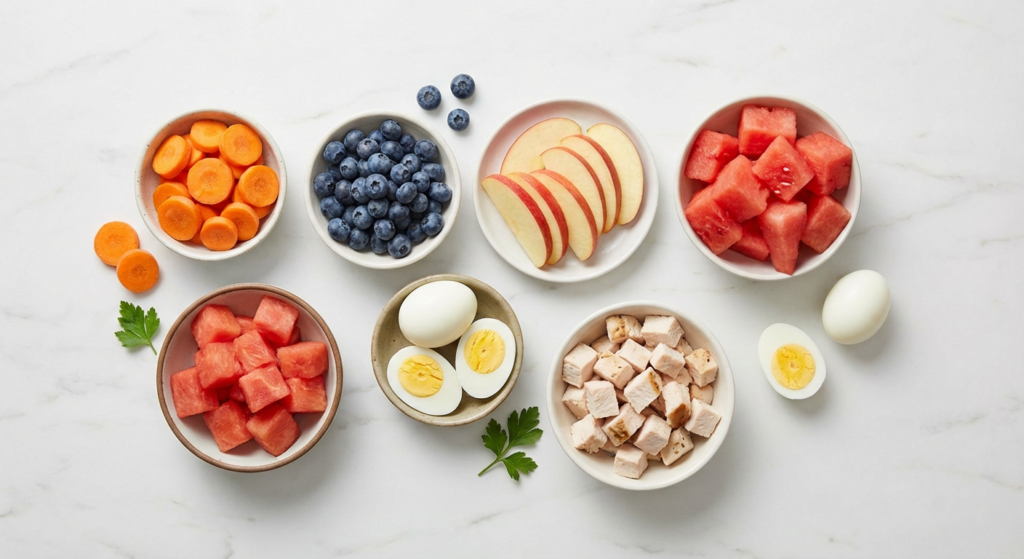
| Carrots | ✅ Yes | Raw or cooked, great low-cal treat |
| Blueberries | ✅ Yes | Antioxidant-rich, small size = easy to portion |
| Cooked chicken | ✅ Yes | Plain only — no garlic, onion, or seasoning |
| Eggs (cooked) | ✅ Yes | Good protein source, avoid raw |
| Watermelon | ✅ Yes | Remove seeds and rind |
| Apples | ✅ Yes | Core and seeds out — seeds contain cyanide compounds |
| Peanut butter | ⚠️ Limit | Check for xylitol — that version is toxic |
| Grapes | ❌ Never | Any amount, any variety — kidney failure risk |
| Onions and garlic | ❌ Never | Damages red blood cells, cumulative effect |
| Macadamia nuts | ❌ Never | Weakness, tremors, hyperthermia within 12 hours |
| Chocolate | ❌ Never | Theobromine — small amounts can be fatal in small dogs |
| Xylitol | ❌ Never | Found in gum, some peanut butters, baked goods — causes rapid insulin spike |
Fruits your dog can eat
Most dogs go after fruit with enthusiasm, which works in their favour — a lot of it is genuinely fine.
Blueberries are probably the best fruit treat for dogs. Small, easy to portion, low calorie, and packed with antioxidants that support cellular health. A small handful (about 10 berries) for a medium dog is a reasonable amount.
Watermelon is 92% water, which makes it useful on hot days as a hydration boost. The flesh is fine; the seeds and rind are not — seeds can cause intestinal blockages, and the rind is hard to digest. Full guide on watermelon for dogs here.
Apples work well as a crunchy treat, but the core and seeds need to come out. Apple seeds contain amygdalin, a compound that releases hydrogen cyanide when metabolised. One or two seeds won’t cause acute poisoning, but it’s not a habit worth forming. Sliced apple, no core — easy fix. More on apples for dogs here.
Bananas are high in sugar compared to most fruits, which makes them a sometimes-treat rather than a daily one. A few slices for a medium dog is fine. More on banana portions here.
Mango is safe once you’ve removed the pit (which is a choking hazard) and the skin. The flesh is sweet and most dogs love it. Keep portions small — it’s higher in sugar than berries. Read the full mango guide.
Strawberries are fine in moderation. They contain an enzyme that may help whiten teeth, which is a nice bonus. A few berries, not a bowl. Strawberry guide here.
What to avoid in the fruit category: Grapes and raisins — no safe amount has been established. The toxin hasn’t been definitively identified, which means there’s no reliable dose threshold. Some dogs eat a bunch of grapes and seem fine; others go into kidney failure after a few. The ASPCA Animal Poison Control Center treats all grape ingestion as an emergency. Don’t risk it.
Vegetables that are genuinely useful
Vegetables tend to be more reliably safe than fruit — lower sugar, higher fibre, and most dogs tolerate them well.
Carrots are probably the most underrated dog treat. Raw carrots are crunchy, low calorie, and the chewing action helps clean teeth. Cooked carrots are softer and easier for older dogs. Either way, they’re one of the few human foods where you don’t really need to think hard about portions.
Cucumber is almost entirely water — about 96%. That makes it excellent for dogs that need low-calorie treats (or dogs that have a tendency to gain weight and look at you with devastating eyes while you eat). Cucumber guide with portions here.
Peas are fine — green peas, snap peas, snow peas. Canned peas with added salt are less ideal. Avoid peas if your dog has kidney issues, as they’re moderately high in purines.
Sweet potato (cooked, not raw) is one of the better vegetable options for dogs. High in fibre, beta-carotene, and vitamins. Raw sweet potato is harder to digest and can cause stomach upset. More on sweet potato here.
Broccoli — small amounts are fine. Large amounts cause gastrointestinal irritation from compounds called isothiocyanates. The florets are better tolerated than the stalks. “Small amounts” means less than 10% of daily food intake.
What to avoid: Onions, garlic, leeks, and chives — the entire allium family. They damage red blood cells and cause hemolytic anaemia. The effect is cumulative, meaning repeated small amounts can build up to a toxic level. Garlic is about five times more toxic than onions per gram. A dog fed garlic-seasoned chicken regularly is at real risk, even if no single meal seems to cause obvious problems.
Proteins and dairy
Cooked chicken is probably the most commonly fed human food to dogs, and for good reason — it’s digestible, high in protein, and most dogs love it. Plain boiled chicken is what vets often recommend for dogs with upset stomachs. The problem is always the preparation: chicken cooked with garlic, onion, herbs, or oil is not the same thing.
Eggs (cooked) are a solid protein source. Scrambled, boiled, poached — all fine. Raw eggs carry a salmonella risk and contain avidin, a protein that blocks biotin absorption when consumed regularly raw. Occasional raw egg probably won’t cause issues; daily raw egg might. Full breakdown on boiled eggs for dogs here.
Cooked salmon is worth mentioning because of its omega-3 content, which supports coat health and has anti-inflammatory properties. It must be cooked — raw salmon can carry a parasite called Neorickettsia helminthoeca, which causes salmon poisoning disease. Cooked is always the right call.
Cheese and yogurt in small amounts are fine for dogs that aren’t lactose intolerant. Most adult dogs produce less lactase than puppies, so dairy in larger quantities tends to cause loose stools. Low-fat plain yogurt has probiotic benefits. A tablespoon is a treat; a bowl is a problem. Natural yogurt guide here.
Peanut butter needs a label check. Standard peanut butter (peanuts, salt, maybe a little oil) is fine in small amounts. Some brands, particularly low-sugar or “natural” peanut butters, use xylitol as a sweetener. Xylitol causes a rapid drop in blood sugar and can cause liver failure in dogs. According to the ASPCA, xylitol is one of the most common causes of dog poisoning calls they receive. If the label lists xylitol anywhere, don’t use it.
Grains and starches
White rice is what most vets recommend when a dog has diarrhoea — plain boiled rice helps firm up stools and is easy on the digestive system. Not nutritionally exciting, but safe and useful. More on rice for dogs here.
Oatmeal (plain, cooked, no sweeteners) is fine and contains beta-glucan, a soluble fibre that can support gut health. Avoid instant oats with added sugar or flavourings.
Corn off the cob is fine. Corn on the cob is a veterinary emergency — dogs swallow large chunks that cause intestinal obstruction. It’s one of those foods where the preparation entirely determines whether it’s safe.
Foods that catch people off-guard
People think these are dangerous — they’re usually not:
- Eggs (the raw concern is real but overstated for occasional feeding)
- Pineapple — fine in small amounts (full guide here)
- Broccoli — fine in small amounts, less than 10% of daily intake
- Cooked plain pork — fine occasionally, no seasoning
People think these are fine — they’re not:
- Grapes — no established safe amount, kidney failure risk
- Nutmeg — often hidden in baked goods, causes tremors and seizures
- Avocado — the flesh is borderline, but the pit, skin, and leaves contain persin. Not worth the risk. Full avocado breakdown here
- Corn on the cob — obstruction risk, not toxicity, but still a vet emergency
Portions matter more than most guides admit
A blueberry that’s fine for a 30kg Labrador represents a meaningfully different proportion of daily calories for a 3kg Chihuahua. Most safe foods lists don’t account for this.
The general guideline: treats (including human food) should make up no more than 10% of a dog’s daily caloric intake. For a 10kg dog eating roughly 400 calories a day, that’s 40 calories of treats — about 8 baby carrots, or a small handful of blueberries, or one slice of banana.
If you want to calculate exactly how much your dog should be eating based on their weight, age, and activity level, the dog food calculator can help you work out the numbers.
Frequently asked questions
Can dogs eat human food every day?
Some human foods, yes — carrots, plain cooked chicken, blueberries. The key is that it should supplement a nutritionally complete dog food, not replace it. Dogs have specific requirements for vitamins, minerals, and amino acids that a diet of random human scraps won’t consistently meet.
What happens if a dog eats something toxic?
Depends on the substance and amount. For anything in the “never” category — grapes, chocolate, xylitol, onions — contact a vet or the ASPCA Animal Poison Control Center (888-426-4435) immediately. Don’t wait for symptoms. With some toxins, symptoms appear hours after the damage is already occurring.
Is it okay to share food from my plate?
The food itself might be fine; how it’s cooked often isn’t. Garlic butter on chicken, onion in a sauce, seasoning blends — these are the hidden risks. Plain versions of most foods are safe. Seasoned, sauced, or heavily salted versions of the same foods frequently aren’t.
Reviewed by Dr. Marcus Webb, DVM. This article is for general informational purposes and does not replace veterinary advice.